
World Cup 2026 Predictions — Semi-Finals, Final and Overall Winner
19 July, MetLife Stadium, East Rutherford, New Jersey. Two teams, one trophy, and roughly 82,500 people in the ground making enough noise to be heard across the Hudson in Manhattan. Somewhere in Ireland, a pub full of neutrals is watching, most of them with a tenner riding on the outcome. This is where World Cup 2026 predictions either look inspired or idiotic — and I won’t know which until the final whistle.
Predicting a World Cup winner is a mug’s game. I know this because I’ve been doing it professionally for nine years and my success rate is about the same as flipping a coin with extra steps. But the process of working through the bracket — mapping group winners to knockout opponents, tracing potential paths to the final, identifying where the heavyweight collisions happen — is what separates a punt from a bet. So let me walk you through the tournament as I see it unfolding, starting from the Round of 32 and working forward to MetLife.
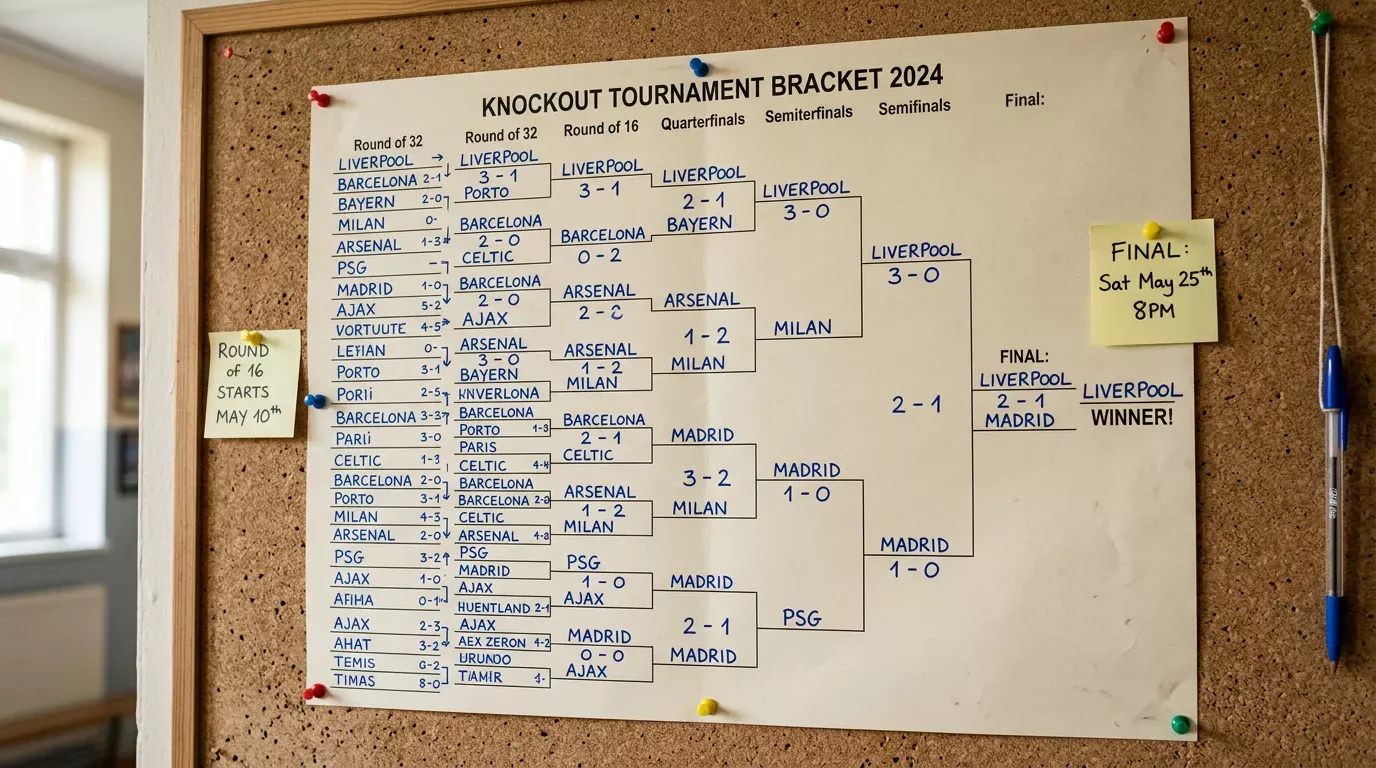
Projected Knockout Bracket — The Road to MetLife
The 2026 knockout format begins with a Round of 32 — an entirely new stage. Thirty-two teams survive the group stage (24 automatic qualifiers as group winners and runners-up, plus eight best third-placed teams), and they’re seeded into a bracket that separates group winners from third-placed qualifiers in the early rounds. The bracket structure means that group winners generally get an easier draw in the Round of 32, facing a third-placed team from another group rather than a runner-up.
Based on my group stage predictions, the top half of the bracket would feature group winners from Groups A through F, while the bottom half takes Groups G through L. This means the potential semi-final matchups are determined by which half of the draw you land in. A top-half semi-final could pit Brazil or Germany against the Netherlands or France. A bottom-half semi-final could see Argentina or Spain against England or Portugal. The draw is designed to prevent teams from the same group meeting until the final, but it doesn’t prevent two heavyweights from colliding in the quarter-finals if they’re in the same half.
The critical factor is which side of the bracket the big teams end up on. If my group predictions hold — Brazil winning Group C, France winning Group I, Argentina winning Group J, Spain winning Group H, England winning Group L — then France and Brazil are on the same side, and Argentina, Spain, and England are on the other. That imbalance matters enormously. One half of the draw is harder than the other, and the teams on the tougher side face more attrition before the final.
My projected bracket, based on group winners and likely third-place qualifiers, suggests the following major matchups on the road to the semi-finals: Brazil vs either Sweden or Tunisia in the Round of 32, France vs either Ecuador or Norway in the Round of 32, Argentina vs either Austria or Turkey, and England vs either Ghana or a third-placed team from Group I or J. The Round of 32 should be largely chalk — the group winners are heavy favourites — but the Round of 16 is where the drama begins.
Quarter-Final Predictions
A friend of mine calls the quarter-finals “the round where the World Cup actually starts.” He’s not wrong. The group stage weeds out the tourists, the Round of 32 removes the scrappy third-placed teams, and the Round of 16 handles the good-but-not-great. By the quarter-finals, you’re left with eight teams that all believe they can win the tournament, and at least half of them are right to think so.
Quarter-final 1 (top half): Brazil vs Germany. This is the matchup the draw is building towards, and it’s a repeat of the 2014 semi-final — the one Brazil lost 7-1 in Belo Horizonte. The trauma of that result still lingers in Brazilian football consciousness, and facing Germany in a knockout match would be emotionally charged. On current form and squad depth, I give Brazil the edge. They have more individual match-winners and their group stage draw is kinder, meaning they’ll arrive in better condition. Brazil advance.
Quarter-final 2 (top half): France vs Netherlands. Two European powers who know each other inside out from qualifying campaigns and Nations League fixtures. France’s squad depth is their weapon — Deschamps can rotate and still field a team that would be favourites in most groups. The Netherlands are defensively disciplined but lack a knockout blow in attack. In a tight match, France’s ability to bring Kolo Muani or Dembélé off the bench gives them an edge that the Dutch can’t match. France advance.
Quarter-final 3 (bottom half): Argentina vs Portugal. Messi’s last World Cup versus Portugal’s post-Ronaldo era. Argentina’s system under Scaloni is more complete — they don’t rely on a single player, they defend as a unit, and they have solutions in every area of the pitch. Portugal have individual talent but have looked fragile in knockout football at recent tournaments, losing to Morocco in the 2022 quarter-finals and to France in the Euro 2024 quarter-finals. Argentina advance, and it might not be particularly close.
Quarter-final 4 (bottom half): Spain vs England. The quarter-final that every Irish person will have an opinion on. Spain beat England in the Euro 2024 final, and that recent head-to-head matters. Spain’s young squad — Yamal, Pedri, Nico Williams — are a year more experienced and a year more confident. England have the better individual defenders and a superior goalkeeper, but Spain’s pressing game creates turnovers that England’s midfield struggles to cope with. I’m picking Spain, but this is the tightest of the four quarter-finals. A penalty shootout wouldn’t surprise anyone, and England’s record from the spot is… well, it’s a conversation starter in any Irish pub.
Semi-Final Predictions
Two matches. Four teams. And by this point in the tournament, we’re looking at the final week of July, with games played in the intense North American summer heat. Fatigue, squad depth, and tactical adaptability become the deciding factors. The team with the deeper squad and the fresher legs holds the advantage.
Semi-final 1: Brazil vs France. This is the match I’d pay to watch. Two footballing cultures that approach the game differently — Brazil’s flair and attacking fluidity against France’s pragmatic efficiency. France have beaten Brazil at the last two World Cups where they met (2006 quarter-final, and 1998 final). Mbappé against Brazil’s high defensive line is a contest that could produce a classic. I’m picking France to edge this one. Deschamps’ tournament nous — his ability to set up his team specifically for the opposition — is an underappreciated advantage. France won the 2018 World Cup by being the most pragmatic team in the field, not the most talented. That pragmatism in a semi-final is worth more than Brazil’s artistry. France advance to the final.
Semi-final 2: Argentina vs Spain. The defending champions against the reigning European champions. Scaloni’s structured, disciplined Argentina against Spain’s high-possession, high-press system. This is a tactical chess match. Spain will dominate the ball — they’ll see 60% or more possession — but Argentina have shown repeatedly that they can win without the ball. They absorb pressure, transition quickly, and punish with ruthless efficiency. Enzo Fernández and Alexis Mac Allister in midfield can match Spain’s technical level, and Julián Álvarez offers a focal point in attack that Spain’s young defenders haven’t faced at this level. I’m picking Argentina. Their experience of winning the 2022 World Cup — knowing how to manage the pressure of semi-finals and finals — is an intangible advantage that Spain’s young squad hasn’t yet acquired.
The Final — Who Lifts the Trophy at MetLife Stadium?
France vs Argentina. A rematch of the 2022 World Cup final in Qatar, widely regarded as the greatest World Cup final ever played. Mbappé’s hat-trick, Messi’s two goals, 120 minutes of football that defied every expectation of what a final could be. The prospect of these two teams meeting again in the final at MetLife is almost too perfect for the narrative-obsessed world of football — and the bookmakers are already pricing it as one of the most likely final matchups.
France’s path to the final in my projection involves winning Group I comfortably, navigating a tricky Round of 32 and Round of 16, and then beating the Netherlands and Brazil in the quarter-final and semi-final respectively. That’s a brutal run, and by the final, they’ll have played six or seven matches in 30-degree heat across multiple time zones. Squad depth becomes everything, and France have it in abundance. Deschamps can field essentially two different teams depending on the opponent, and his bench includes players who would start for most other nations.
Argentina’s path is equally demanding: Group J, then knockout rounds that could include Portugal and Spain. But this is a team that won the Copa América in 2024 and the World Cup in 2022 — they know how to peak at the right moment. Scaloni’s management of minutes and fitness has been exemplary, and the Argentine squad is structured specifically for tournament football. Every player knows their role. There’s no confusion about identity or system.
In the final itself, I’m picking France. Here’s my reasoning: Argentina’s greatest strength — their experience of winning — is also their greatest vulnerability. The squad is a year older across the board. Messi, if he plays, will be managing his body through 90 minutes (or more) at 39. The emotional weight of defending a title is different from chasing one, and France — who lost the 2022 final on penalties — will carry the motivation of revenge. Mbappé will be desperate to win the one trophy that’s eluded him in his own name rather than as part of an ensemble. That individual drive, combined with France’s collective depth, tips the balance.
My World Cup 2026 prediction: France lift the trophy at MetLife Stadium on 19 July 2026, becoming the first European team to win a World Cup in the Americas since the rule was supposed to be unbreakable.
England’s Path to the Final — Can They Do It?
Every Irish punter will be tracking England’s progress, whether they’re backing them or rooting for their elimination. So let me map out what England’s tournament could look like.
Group L (Croatia, Ghana, Panama) is navigable. England should finish first, though Croatia will make one of those three group matches very uncomfortable. The Round of 32 pairs England against a third-placed team — likely from Group G or Group I — which they should handle without drama. The Round of 16 is where it gets real, with a potential match against a runner-up from Group K, which could be Colombia. That’s a tough draw but winnable.
The quarter-final, in my projection, is England vs Spain. And as I outlined above, I think Spain win that one. England’s tournament ends in the quarter-finals. Some will call it a disappointment. Others will point out that reaching the last eight at a 48-team World Cup is no disgrace, especially given the draw they face. The reality, as every English fan knows and every Irish fan gleefully reminds them, is that anything short of the semi-finals feels like a failure for a squad of this quality.
If England do get past Spain — and it’s entirely possible; one penalty shootout going their way changes everything — they’d face Argentina in the semi-final. Argentina vs England at a World Cup. The history. The baggage. The Hand of God. The 1966 final. The 1998 penalty shootout. The 2002 group stage. It’s the kind of fixture that makes neutrals clear their calendars. I’m not predicting it happens, but if it does, I’m clearing mine at 2am Irish time.
The Wildcard Nobody Is Talking About
Every World Cup produces a team that nobody saw coming. Croatia in 2018. Morocco in 2022. South Korea and Turkey in 2002. The expanded 48-team format increases the chances of a wildcard run because more matches mean more opportunities for upsets, and the Round of 32 gives dark horses an extra lifeline that didn’t exist before.
My wildcard for 2026 is Colombia. They’re priced at 25/1 in the outright winner market, which puts them in the same range as Morocco before 2022 and Croatia before 2018. The indicators are similar: a squad packed with players at top European clubs, a recent near-miss at a continental championship (Copa América 2024 final), a favourable draw that could see them avoid the very top teams until the quarter-finals, and a passionate fanbase that travels in numbers. Colombia have the midfield quality — built around James Rodríguez’s successor generation — to control matches against anyone, and their defensive record in qualifying was exceptional.
If Colombia top Group K (which requires beating Portugal, admittedly a stretch, but not impossible) or finish second, they land on the bottom half of the bracket. A potential path of Round of 32 vs a third-placed team, Round of 16 vs a group winner from Group G or H (Belgium or Spain), and quarter-final vs Argentina or Portugal. It’s demanding, but every run by a wildcard team at a World Cup involves beating someone you’re not supposed to beat. Colombia have the squad, the form, and the mentality. At 25/1, they’re worth a small outright bet, and you can read more about where to find those odds on the winner odds page.