
Spain at the World Cup 2026 — La Roja’s Odds & Squad Preview
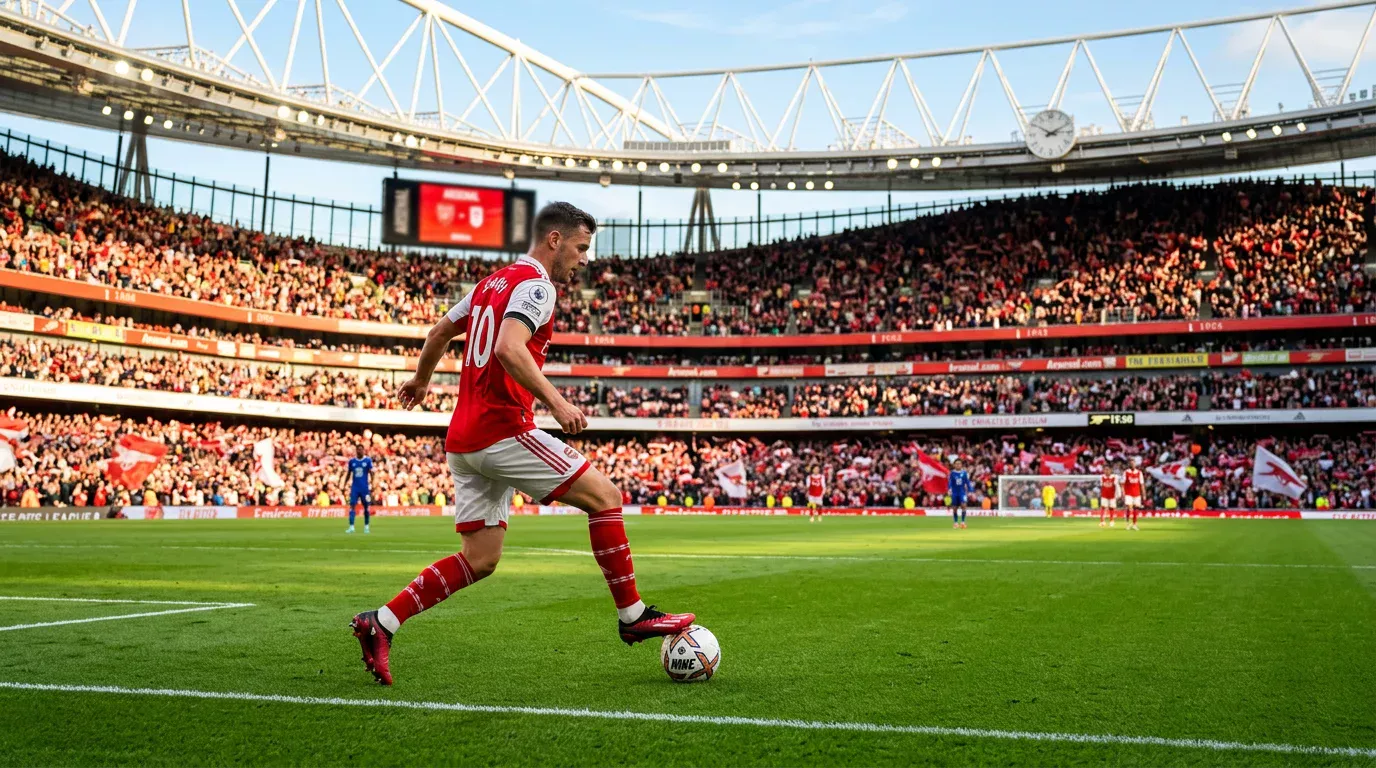
Berlin, 14 July 2024. Spain lift the European Championship trophy after a tournament in which they won every single match, beating England 2-1 in the final with a second-half performance that left the football world recalibrating its assumptions about who the best team on the planet actually is. Less than two years later, La Roja arrive at the World Cup 2026 as the reigning European champions and one of the most exciting young squads in international football. Their outright odds hover around 6/1, which places them behind Brazil, France, and Argentina in most bookmaker markets. I think that price underestimates them. Spain at the 2026 World Cup are the value bet of the tournament, and I intend to explain exactly why.
From Euro 2024 Champions to World Cup Contenders
The temptation after any major tournament victory is to assume momentum will carry through to the next. Football does not work that way — ask Italy, who won Euro 2020 and then failed to qualify for the 2022 World Cup entirely. But Spain’s Euro 2024 triumph was different from most European Championship wins because of the age profile of the squad that delivered it. The average age of Spain’s starting eleven in the Euro 2024 final was 24.8 years, the youngest of any European Championship-winning side in the modern era. These are not players approaching the end of a cycle. They are players entering their prime, with a major tournament win already embedded in their collective memory.
The tactical identity that carried Spain through Germany was possession with purpose — not the sterile tiki-taka of the late 2010s, but a more direct, aggressive approach that used ball control as a weapon rather than a shield. Spain averaged 66% possession during Euro 2024 but also led the tournament in entries into the final third and ranked second in expected goals. The ball was not just kept — it was used to create, to penetrate, to hurt. That evolution from process-oriented possession to outcome-oriented possession is the single most important tactical development in Spanish football over the past four years, and it makes La Roja significantly more dangerous at the World Cup than their World Cup odds currently imply.
The continuity between Euro 2024 and the World Cup 2026 qualifying campaign has been seamless. The same core of players, the same tactical framework, the same coaching philosophy. Spain did not need to reinvent themselves after the European Championship — they needed to refine, and the qualifying results suggest the refinement has been thorough. The squad that arrives in North America in June will be older, more experienced, and more tactically complete than the one that won in Berlin. The only significant change has been the integration of two or three younger players who have emerged at club level since the European Championship, adding even more depth to an already stacked roster. At 6/1, that represents value.
How Spain Qualified
Spain topped their UEFA qualifying group with a record that brooks no argument: nine wins, one draw, and zero defeats across ten matches. The draw came away to Switzerland in Zurich — a 1-1 stalemate in conditions that favoured the hosts — and was the only time Spain dropped points across the entire campaign. The goal difference of +28 was the second-best in European qualifying behind England’s +22, though Spain achieved it in a group that most analysts considered stronger overall.
The defensive record was outstanding. Spain conceded just five goals in ten qualifiers, keeping seven clean sheets. That resilience at the back, combined with the attacking fluency that produced 33 goals, creates a statistical profile that screams “tournament contender.” Teams that keep clean sheets consistently in qualifying tend to perform disproportionately well in tournament knockout matches, where a single defensive lapse can end the campaign. Spain’s backline was breached fewer than once every two matches during qualifying — a record that only Italy’s Euro 2020 qualifying campaign can match among recent European champions.
The away form was particularly impressive. Spain won four of their five away qualifiers, scoring fourteen goals on the road. The 3-0 victory in Scotland was the standout — a clinical dismantling of a well-organised side that demonstrated Spain’s ability to impose their game on hostile territory. The 2-1 win in Serbia was equally telling, requiring a late Olmo goal after Serbia had equalised and briefly threatened an upset. Spain’s response to adversity — scoring within eight minutes of conceding — was a pattern repeated across the campaign and speaks to a squad mentality that refuses to accept anything less than victory. For the World Cup, where every match is technically an away fixture except for the three host nations, that away resilience is invaluable. Spain do not wilt when the crowd is against them. They simply play their football, and their football is usually enough.
Key Players — The Next Golden Generation
Lamine Yamal turned 17 during Euro 2024 and became the youngest goalscorer in European Championship history. By the time the World Cup kicks off in June 2026, he will be 18 — still a teenager, already one of the ten best footballers on the planet. His development at Barcelona has been extraordinary even by the club’s prodigious standards: a player who dribbles past defenders with the nonchalance of a veteran, delivers crosses and through-balls with pinpoint accuracy, and shoots with a confidence that belies his age. Yamal’s World Cup 2026 will be defined by whether he can replicate his Euro 2024 form — four assists and one goal — across a longer, more gruelling tournament. I believe he can. At Barcelona, he has played over fifty competitive matches in the 2025-26 season, and the physical demands of a World Cup will not faze a player who has been competing at the highest level since he was sixteen.
Pedri is the metronome of Spain’s midfield. His ability to receive the ball under pressure, turn, and play a progressive pass into the final third is unmatched among midfielders at the tournament. Injuries hampered his development between 2022 and 2024, but the past eighteen months have seen a return to full fitness and a level of performance at Barcelona that recalls the early days of Xavi and Iniesta — though Pedri would be the first to reject such comparisons. His partnership with Gavi — fiery, combative, and relentlessly energetic — gives Spain a midfield axis that can dominate possession while also competing in the physical duels that South American and African opponents will bring.
Nico Williams provides the pace and directness on the left flank that balances Yamal’s creativity on the right. At Athletic Club, Williams has developed into a devastating wide attacker who terrifies full-backs with his acceleration and end product. His Euro 2024 final goal against England — a driving run from the left, cutting inside, and a finish into the far corner — announced him as a player capable of producing decisive moments on the biggest stage. The Yamal-Williams combination across the front line gives Spain the most exciting attacking pair at the World Cup, and their speed on the counter-attack provides a dimension that Spain’s traditional possession game has historically lacked.
At centre-back, the partnership of Robin Le Normand and Aymeric Laporte — or Pau Cubarsí, who has emerged as a genuine contender for a starting spot at 18 years old — provides stability and composure. Cubarsí’s rapid development at Barcelona mirrors Yamal’s trajectory: a player thrust into first-team football earlier than anyone expected who has responded with performances that belie his age. His reading of the game, his composure on the ball under pressure, and his ability to step out of the backline to win the ball in midfield areas give Spain a defensive option that combines youth with genuine quality. Whether the manager trusts him to start a World Cup quarter-final remains to be seen, but the option to rotate centre-back pairings without sacrificing quality is a luxury most nations do not possess.
Dani Olmo’s ability to play as a number ten or a false nine adds tactical flexibility, and Álvaro Morata’s experience as a centre-forward, while not spectacular, offers the kind of intelligent movement and hold-up play that allows Yamal and Williams to exploit the space he creates. Unai Simón in goal has grown into one of the most assured goalkeepers in European football, his distribution complementing Spain’s build-from-the-back philosophy and his shot-stopping providing the last line of defence when opponents do manage to create chances. The squad has no weak links. Every position is contested by two or three players of genuine international quality, which gives the manager selection headaches that most national-team coaches would envy.
Group H — Cape Verde, Saudi Arabia, Uruguay
The group draw handed Spain a fascinating combination of opponents. Uruguay are the standout — a side with four World Cup semi-final appearances in their history, a squad built around Fede Valverde and Darwin Núñez, and a tactical rigidity under Marcelo Bielsa that can frustrate even the most technically gifted opponents. The Spain-Uruguay fixture is the group-stage match most likely to produce a genuine tactical chess match, with both sides comfortable in possession and both unwilling to cede territorial control. I expect a tight, cagey affair — probably 1-0 or 1-1 — that sets the tone for both teams’ tournament campaigns.
Saudi Arabia’s World Cup 2022 campaign peaked with the extraordinary 2-1 victory over Argentina in the group stage, but the rest of that tournament exposed a squad that lacked the depth to sustain that level across three matches. The current squad is rebuilding, with several players from the 2022 team retired or no longer at their peak. Saudi Arabia will defend deep against Spain and look to exploit transitions, but Spain’s pressing intensity and possession dominance should overwhelm them. A 3-0 or 4-0 Spanish victory is the most likely outcome.
Cape Verde are one of four debutants at this World Cup, and their presence alone is a remarkable achievement for a nation of fewer than 600,000 people. Their squad is built around European-based professionals — several play in the Portuguese Primeira Liga and the French lower divisions — and their defensive organisation during African qualifying was impressive enough to earn them a spot among the 48. Against Spain, they will be outclassed, but the occasion itself — a first World Cup match for a tiny Atlantic island nation — will produce an atmosphere that transcends the scoreline. For betting purposes, Spain to win to nil is the play in this fixture.
My predicted finishing order: Spain first, Uruguay second, Saudi Arabia third, Cape Verde fourth. The Spain-Uruguay match determines who tops the group, and I give Spain the edge based on their superior squad depth and tactical versatility. Uruguay could challenge for first place if Valverde and Núñez produce the kind of performances their club form suggests they are capable of, and the exact finishing positions market — Spain first, Uruguay second — at around 11/8 is the best group-stage bet I can find in Group H.
Spain’s Style — Possession With Purpose
I used the phrase “possession with purpose” earlier, and it deserves expansion because it encapsulates the fundamental shift in Spanish football philosophy that makes this squad different from the 2010-2014 vintage. The tiki-taka era, for all its success, became predictable. Opponents learned that if they sat deep and accepted Spain’s possession, they could frustrate La Roja into sideways passing and sterile domination. The nadir was the 2014 World Cup, where Spain were eliminated in the group stage after being dismantled 5-1 by the Netherlands and 2-0 by Chile.
The current generation rejects that passivity. Spain now press with an intensity that rivals any team at the tournament — triggered by the loss of the ball, executed in waves, with Pedri and Gavi leading the charge from midfield. The pressing statistics from Euro 2024 were striking: Spain won the ball back in the opponent’s half more frequently than any other team in the tournament. Combined with their possession dominance, this creates a suffocating game that gives opponents no time on the ball and no space to breathe. It is possession as aggression, not possession as safety.
In attack, the width provided by Yamal and Williams stretches defences horizontally, creating the central spaces that Pedri and Olmo exploit with incisive through-balls. The full-backs — typically Marc Cucurella on the left and Dani Carvajal on the right — overlap to provide additional width, turning the pitch into a 70-metre-wide canvas that opponents cannot cover without leaving gaps. When the ball reaches Yamal or Williams in a one-on-one situation against a full-back, the probability of a chance creation is among the highest in international football. That combination of systemic structure and individual brilliance is why I consider Spain undervalued at 6/1.
The transition speed is the element that separates this Spain from the tiki-taka era. When Spain win the ball back — and they win it back frequently, given their pressing intensity — the shift from defence to attack takes fewer than five seconds on average. Yamal and Williams both stay high when Spain lose possession, ready to receive the ball in space the moment it is recovered. This creates a dual threat: opponents who commit players forward to break Spain’s press leave themselves exposed to devastating counter-attacks through the widest channels on the pitch. The dilemma for opponents is binary and unpleasant — press Spain and risk being countered, or sit deep and accept being suffocated by possession. Neither option is attractive, which is precisely why Spain’s tactical setup is the most sophisticated at the tournament.
Spain’s Outright and Tournament Odds
At 6/1, Spain are the fifth favourite in most outright markets — behind Brazil, France, Argentina, and England. I consider this a mispricing. Spain have the reigning European Championship, an unbeaten qualifying campaign, the youngest and most dynamic squad at the tournament, and a tactical identity that has been refined across two years of competitive football. The only argument for pricing them behind Brazil and France is historical World Cup pedigree, and pedigree is a backward-looking metric that tells you where a team has been, not where it is going.
The market where I see the most value is “Spain to reach the semi-final,” priced around 6/4 with most operators. Their group is manageable — even Uruguay, the strongest opponent, is a side Spain have consistently beaten in recent competitive encounters. The knockout path from Group H should avoid the strongest seeds until the quarter-final at the earliest, giving Spain at least four matches against opponents they should beat. Reaching the semi-final requires one significant scalp — probably a quarter-final against a European rival — and Spain’s Euro 2024 performances against Germany and France in the knockout rounds demonstrate they are more than capable of winning exactly that kind of match.
For player markets, Yamal to be named the tournament’s best young player is an almost certainty if Spain progress to the semi-final, and the odds of around 3/1 are generous. His goal involvement — goals plus assists — during Euro 2024 was five in seven matches, and a similar rate across a World Cup would put him in contention for the Golden Ball, not just the young player award. If you want a single Spain bet that combines reasonable odds with high probability, Yamal for best young player is it.
Where La Roja End Their Summer
I predict Spain reach the semi-final, with a genuine chance of going further. Their ceiling is the highest at the tournament — if everything clicks, if Yamal and Williams are at their devastating best, if Pedri controls the midfield the way he did in Berlin, Spain can beat anyone. The floor is a quarter-final exit, probably against France or Brazil, in a match where experience in World Cup knockout football — which Spain’s young squad lacks relative to the established favourites — tips the balance. The gap between Spain’s ceiling and floor is wider than for any other top-four side, which is what makes them simultaneously the most exciting and the most unpredictable contender.
The wildcard factor is youth itself. At 18, Yamal has no World Cup baggage. He does not carry the weight of previous failures. He does not tighten up in the second half of a quarter-final because he has been knocked out at this stage before. The fearlessness of a teenager who does not know he is supposed to be nervous is a weapon that no amount of experience can replicate. Spain’s average squad age of around 25 means that the majority of their players have either one or zero World Cup appearances to their name. That inexperience is a risk. But it is also a liberation — these players have not learned to fear the World Cup yet, and by the time they do, it might be too late for anyone to stop them.
If Spain win the 2026 World Cup, it will be because their young players treated it as an adventure rather than a burden — and because the Group H draw gave them the gentle opening they needed to build confidence before the real tests arrived.