
World Cup 2026 Group L — England, Croatia, Ghana, Panama
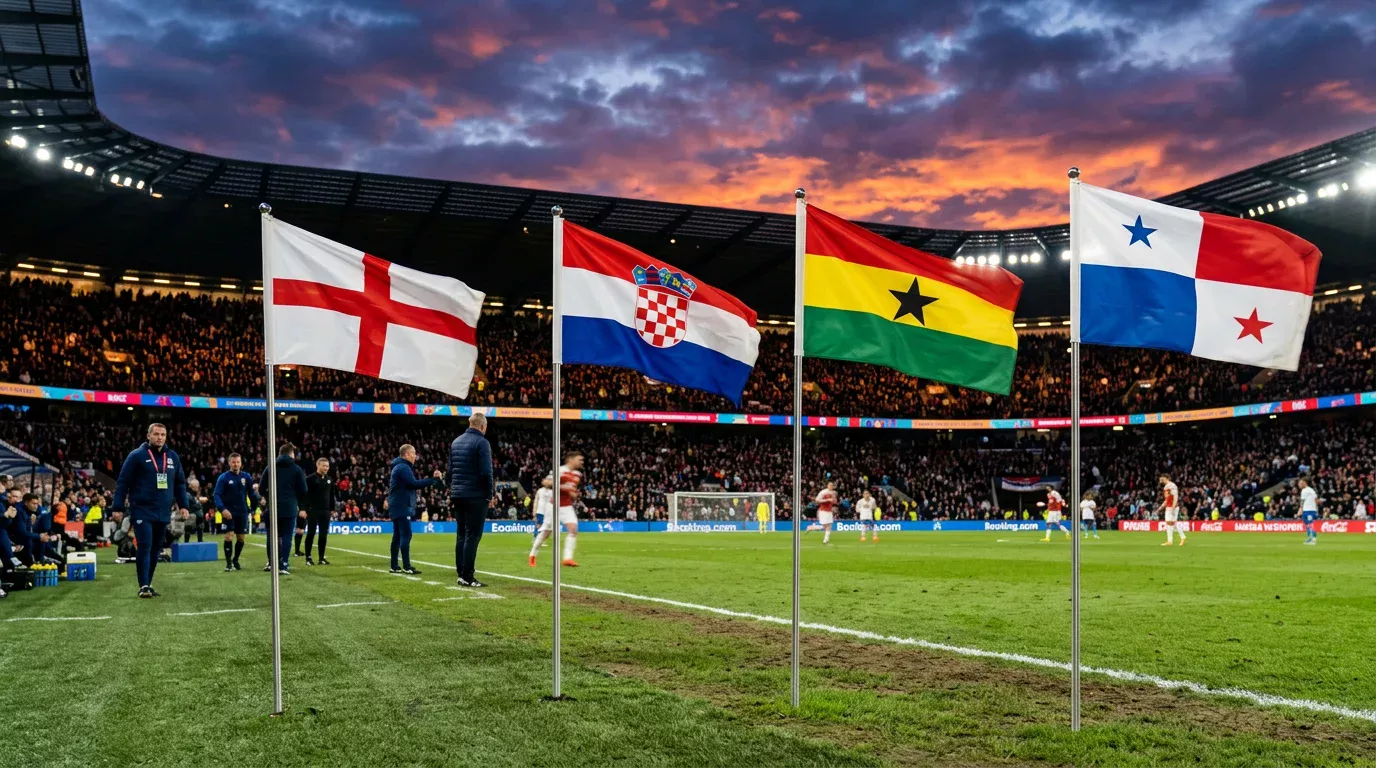
For every Irish person who has ever had a complicated relationship with England — and that is all of us — World Cup 2026 Group L is appointment viewing. Our nearest neighbours, our oldest sporting rivals, and the team we simultaneously want to fail and secretly hope might win the whole thing, are drawn alongside Croatia, Ghana, and Panama. This is the group that will dominate conversation in every Irish pub from June to July, the one where allegiances will be tested and pint-fuelled arguments will rage about whether we should cheer for the English or against them. I have spent nine years covering tournament betting, and I can tell you this: Group L is not just interesting for the Irish angle. It is one of the strongest groups at the entire World Cup, with two genuine contenders, an unpredictable African side, and a CONCACAF qualifier with nothing to lose.
The Group Irish Fans Will Argue About
There is no neutral ground when it comes to Ireland and England. The sporting rivalry stretches back over a century, tangled with history, culture, and the kind of emotional complexity that only neighbouring nations truly understand. When England play at a World Cup, Irish households divide into two camps: those who want to watch them crash out in spectacular fashion and those who quietly admit they would not mind seeing them go far — as long as nobody finds out. Group L is where those loyalties will be tested most severely.
The draw has given England a group that is challenging but navigable. Croatia are familiar opponents — the two sides met in the 2018 World Cup semi-final, which Croatia won in extra time — and Ghana bring the kind of pace and athleticism that has caused England problems in the past. Panama are the weakest side on paper but are making their second World Cup appearance and will approach every match as the opportunity of a lifetime. For Irish punters, the group dynamics create multiple betting opportunities: England’s match-by-match results, the qualification market, and the ever-popular “will England bottle it?” specials.
Whether you cheer for them or against them, England will be the most-discussed team in Ireland during this World Cup. And if they crash out in the group stage — which is unlikely but not impossible with Croatia and Ghana lurking — the atmosphere in Irish pubs will be electric for entirely the wrong reasons.
England — Favourites But Never Comfortable
England’s World Cup record is a case study in unfulfilled potential. One trophy (1966), three semi-final appearances since, and a persistent inability to deliver in knockout rounds that has become part of the national identity. The current squad is among the most talented England have ever produced — with players starring at the highest level of European club football in nearly every position — yet the familiar anxiety about whether talent will translate to tournament success follows them to every major competition.
The squad heading to North America is built around a core that has experienced the highs of reaching the Euro 2020 final and the lows of losing it on penalties. That experience — the taste of being so close — should provide motivation, but it can also create a fear of failure that manifests in cautious tactical setups and a reluctance to take risks in decisive moments. England’s coaching setup favours pragmatism over flair: organised defensive structures, controlled possession phases, and an emphasis on set pieces as a primary attacking weapon. It works — England have been consistently competitive at major tournaments since 2018 — but it does not always inspire.
In Group L, England are favourites at around 4/7 to top the group. They should beat Panama comfortably and have the quality to overcome Ghana, but Croatia represent a genuine obstacle. The head-to-head record between England and Croatia at World Cups is loaded with drama, and their Group L encounter could be the match that determines whether England finish first or second. At 4/7, the value is thin for a standalone bet, but England to win the group can anchor accumulators if you are looking for a reliable leg alongside riskier selections elsewhere.
Croatia — The Perennial Dark Horse
Croatia reached the World Cup final in 2018, finished third in 2022, and have established themselves as one of the most consistently excellent teams at major tournaments over the past decade. For a country of four million people, their footballing output is staggering — a product of exceptional youth development, a midfield tradition that produces generational talent, and a national team culture that treats every tournament as an existential mission.
The Croatian squad for 2026 is in a transitional phase, with the legendary midfield trio of the 2018 and 2022 cycles ageing out and a new generation stepping into their roles. The transition has not been seamless — qualification required effort, and some of the control that characterised Croatia’s peak performances has diminished — but the underlying quality remains. Croatian midfielders are technically exceptional, tactically intelligent, and capable of controlling matches against any opponent. Their defensive line is well-organised, and their forwards offer enough quality to punish the half-chances that the midfield creates.
At around 5/4 to qualify from World Cup 2026 Group L, Croatia are the most dangerous team England could face. Their experience in high-stakes matches — two World Cup semi-finals in four years — gives them a composure that few teams can match, and the England vs Croatia fixture is the match most likely to produce an upset. I rate Croatia as strong value to qualify, and the 2018 semi-final revenge narrative adds an emotional dimension that could lift them on the day. For Irish fans who want England to struggle, Croatia are your team.
Ghana — African Flair and Unpredictability
Ghana have a storied World Cup history, reaching the quarter-finals in 2010 and producing some of the tournament’s most memorable moments — not least Asamoah Gyan’s missed penalty against Uruguay that could have made them the first African semi-finalists. The Black Stars bring a combination of pace, physicality, and technical ability that makes them dangerous opponents in a group-stage setting, where their athleticism and directness can overwhelm more cautious teams.
The current Ghanaian squad is built around players competing in Europe’s top leagues, with the Premier League, Bundesliga, and Serie A all represented in the first-choice eleven. Their attacking play is electric — fast, direct, and willing to take on defenders one-on-one — while their midfield provides the energy and ball-winning capability to sustain pressure over 90 minutes. Defensively, Ghana are less convincing: their high line can be exploited by teams with quick forwards, and their set-piece defending has been a recurring weakness.
At around 5/2 to qualify from Group L, Ghana are the wildcard. A victory against Panama and a competitive performance against England or Croatia could yield enough points for a top-three finish. Their match against England is the fixture where they have the most to gain — a shock result there would redefine the group standings and send Irish pubs into absolute pandemonium. Ghana to beat England at around 6/1 is the kind of long-shot punt that Irish neutrals will queue up for, and given Ghana’s history of upsetting European opponents at World Cups, it is not as outlandish as the odds might suggest.
Panama — Underdog With Nothing to Lose
Panama’s first World Cup appearance came in 2018, where they lost all three group matches but celebrated their tournament goal — scored against England — as though they had won the entire competition. That moment captured everything about what the World Cup means to smaller footballing nations: the experience of being there matters as much as the results. In 2026, Panama return with a stronger squad, more experience, and the same fearless attitude that made them such endearing underdogs in Russia.
The Panamanian squad is built around CONCACAF-tested players — physically robust, tactically disciplined, and accustomed to the intense rivalry matches that characterise the region. Their defensive shape is compact and well-drilled, and their counter-attacking speed can trouble opponents who overcommit going forward. Against England and Croatia, Panama will sit deep and look to absorb pressure before hitting on the break. Against Ghana, they face a more open contest where their defensive qualities will be tested by pace and trickery rather than possession.
At around 8/1 to qualify from Group L, Panama are long shots, but their CONCACAF qualifying record shows a team that regularly produces results against stronger opponents. A draw against Ghana — priced at around 11/4 — is the most realistic positive result on their schedule, and a point from that match could keep their slim qualification hopes alive heading into the final matchday. For Irish neutrals, Panama are easy to enjoy: spirited, passionate, and utterly delighted to be there.
The Key Match — England vs Croatia (Again)
England and Croatia have produced some of the most dramatic World Cup encounters in recent history. Their 2018 semi-final — where Croatia came from behind to win 2-1 in extra time — remains one of the defining matches of that tournament, and the rematch in Group L carries all the weight of that shared history. England will approach this fixture knowing that a defeat could mean finishing second in the group, while Croatia will view it as a statement of intent from a team in transition.
From a betting perspective, England are favourites at around 4/5, with the draw at 12/5 and a Croatia win at 7/2. The under 2.5 goals market at around 4/5 looks attractive — both teams are defensively organised enough to keep the match tight, and the stakes involved will encourage caution rather than adventure. For in-play bettors, the first goal will be critical: if England score first, they tend to control matches effectively, but if Croatia take the lead, their ability to manage games through midfield control could frustrate England for the remainder.
Group L Match Schedule in Irish Time
Group L fixtures will be played between 17 and 26 June 2026. With all matches at US venues, Irish viewers should add five hours to Eastern Time kick-offs or eight hours to Pacific Time starts. Most matches will fall between late evening and the early hours IST.
| Date | Match | Venue | Kick-off (IST) |
|---|---|---|---|
| 17 June 2026 | England vs Ghana | TBC | TBC |
| 17 June 2026 | Croatia vs Panama | TBC | TBC |
| 22 June 2026 | England vs Croatia | TBC | TBC |
| 22 June 2026 | Ghana vs Panama | TBC | TBC |
| 26 June 2026 | England vs Panama | TBC | TBC |
| 26 June 2026 | Croatia vs Ghana | TBC | TBC |
The England vs Croatia fixture on Matchday 2 is the one to circle. Clear your diary, message the group chat, and find the pub with the best screen. FIFA will confirm exact times in the coming weeks.
Group L Odds and Our Prediction
England to win Group L at 4/7 is the likely outcome, but Croatia at 5/4 to qualify is the bet with the most substance. Croatia’s tournament pedigree, tactical discipline, and midfield quality make them a strong second favourite, and their odds offer a return that reflects genuine competitive uncertainty rather than a foregone conclusion. Ghana at 5/2 to qualify carry appeal for punters willing to back African flair and pace over European structure.
My predicted final standings: England first, Croatia second, Ghana third, Panama fourth. England’s squad depth and set-piece quality should be enough to top the group, but Croatia will push them hard in their direct encounter. Ghana will compete energetically in every match but may lack the consistency to accumulate enough points for a top-two finish. Panama will enjoy every moment but exit after the group stage.
For Irish neutrals, Group L is the emotional heart of this World Cup. It is the group we will talk about in the pub, the one we will argue about on social media, and the one where our complicated feelings about England will be on full display. Whether you want them to win or crash out in flames, you will be watching. That much is guaranteed.
For the complete overview of all twelve groups, head to the World Cup 2026 groups overview.