
Brazil at the World Cup 2026 — Odds, Squad & Group C Preview
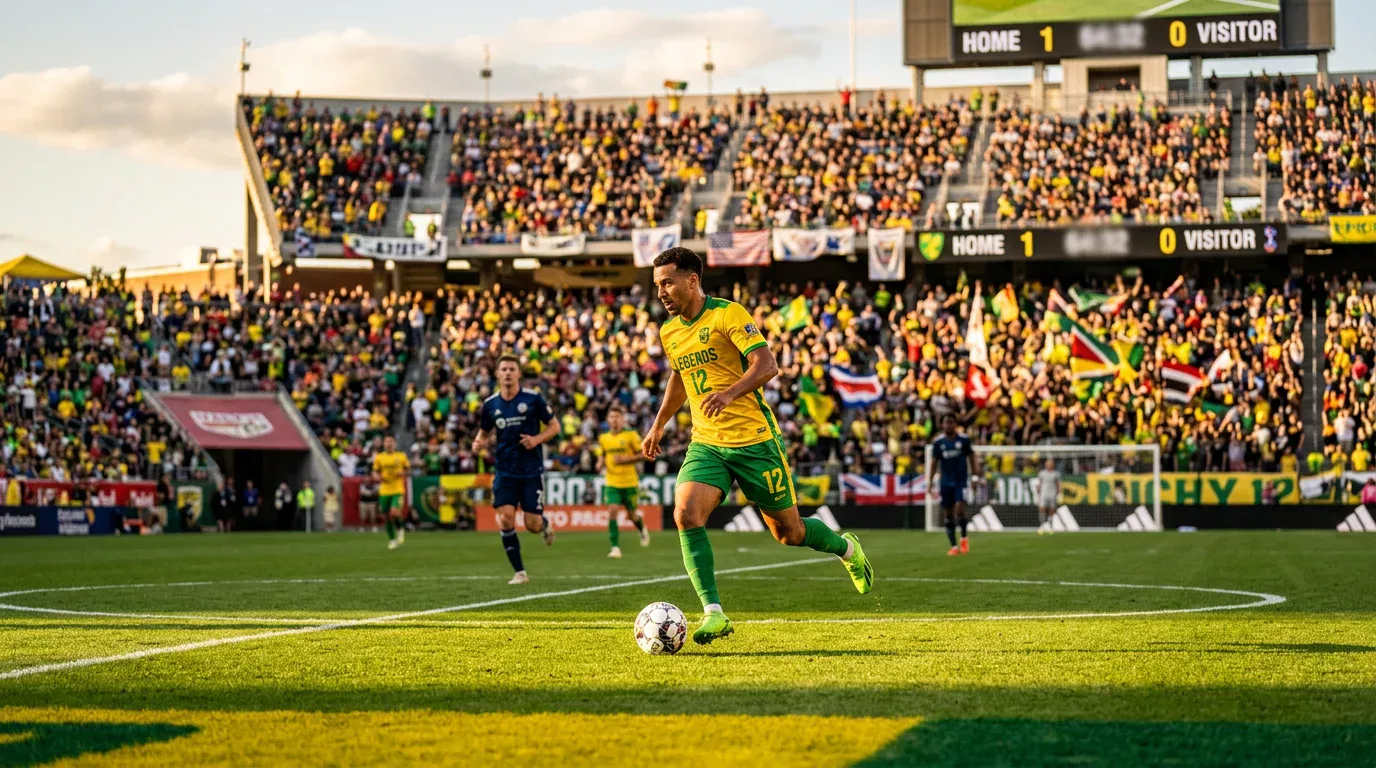
Five stars on the shirt. Five World Cup titles. And twenty-four years since the last one. Brazil arrive at the 2026 World Cup as the bookmakers’ favourite in most outright markets, priced around 9/2 to lift the trophy at MetLife Stadium on 19 July, but the Seleção have not won a knockout match at a World Cup since 2002. That is not a misprint. The most decorated nation in the history of the tournament has spent two decades being eliminated in quarter-finals and round-of-16 ties, often in circumstances that left their own fans bewildered. I find Brazil the most intriguing betting proposition at this tournament precisely because the gap between their reputation and their recent results is wider than for any other side. For Irish punters watching from the neutral corner, Brazil represent the ultimate question: do you bet on the talent you can see, or the pattern you cannot ignore?
Five Stars — Brazil’s World Cup Legacy
My first World Cup as an analyst was 2018, and I remember a veteran colleague telling me, “Never bet against Brazil in a World Cup year.” He lost money that summer when Belgium dismantled them 2-1 in the quarter-final. But the underlying logic was not entirely wrong. Brazil’s World Cup pedigree is unmatched: winners in 1958, 1962, 1970, 1994, and 2002, with a record that includes more matches played, more goals scored, and more tournament appearances than any other nation. The Seleção have qualified for every single World Cup since 1930. No other country can make that claim.
The weight of that history cuts both ways. It provides a sense of inevitability — the belief, shared by players and fans, that Brazil simply belong in the latter stages of every tournament. But it also creates pressure that can become suffocating. The 7-1 defeat to Germany in the 2014 semi-final, played on home soil in Belo Horizonte, remains the most traumatic result in Brazilian football history and cast a shadow over the two World Cups that followed. In 2018, they lost to Belgium. In 2022, they were eliminated on penalties by Croatia after dominating for 105 minutes. The talent has always been there. The composure in decisive moments has not.
For the 2026 World Cup, Brazil carry both the expectation of their history and the burden of their recent failures. The question punters need to answer is straightforward: is this the squad that ends the drought, or is this another cycle of brilliance followed by a devastating exit? The odds suggest the market leans toward the former, but I am not entirely convinced, and I will explain why.
How Brazil Qualified — The CONMEBOL Road
CONMEBOL qualifying is a marathon, not a sprint — eighteen matches spread across two years, played in conditions that range from the altitude of La Paz to the humidity of Manaus. Brazil finished second in the standings behind Argentina, accumulating 39 points from their eighteen fixtures. The campaign was solid rather than spectacular: eleven wins, six draws, and a single defeat, which came in Buenos Aires against Argentina in a match that was effectively a dead rubber with both sides already qualified.
The home record was dominant. Brazil won all nine of their home qualifiers, scoring 28 goals and conceding just four at the Maracanã and various other venues across the country. The away record was more mixed — four wins and five draws on the road — but the context matters. No team in CONMEBOL history has gone through qualifying with fewer than three away draws. The division is brutal, and Brazil’s consistency across the full eighteen-match schedule was impressive by any standard.
What stood out was the defensive improvement. Brazil conceded just eleven goals across eighteen qualifiers, the best defensive record in the CONMEBOL table. Under the current coaching setup, the backline has been organised with a discipline that previous Brazilian managers often sacrificed in pursuit of attacking flair. The full-backs still push forward — this is Brazil, after all — but the centre-back partnership and the midfield screen in front of them are structured and compact in ways that earlier iterations were not. For punters, this matters: a Brazil side that can defend is far more dangerous in knockout football than one that relies solely on outscoring opponents.
The goal distribution is worth examining. Seventeen different players scored during qualifying, which suggests a balanced attacking threat rather than dependence on a single forward. That spread of goals is significant for tournament betting — it reduces the risk of one injury derailing the entire campaign and makes the “team total goals” market more predictable than individual scorer markets.
Key Players — The New Seleção
Vinícius Júnior is the player around whom this entire World Cup campaign orbits. At Real Madrid, he has become the most electrifying attacker in world football — a player who can beat three defenders in the space of ten metres and produce a finish that makes goalkeepers question their career choices. His qualifying numbers were strong: eight goals and six assists in fourteen appearances, including a hat-trick against Bolivia in Belém that showcased his full repertoire of dribbling, movement, and clinical finishing. Vinícius is not merely Brazil’s best player; he is the player most likely to produce a defining World Cup moment — the kind of individual goal or assist that replays for decades.
The concern with Vinícius has always been consistency. His performances fluctuate between the sublime and the anonymous, and his temperament under provocation — he has received more tactical fouls than any player in La Liga over the past three seasons — remains a vulnerability. If opponents target him physically, as Croatia did effectively in the 2022 quarter-final, his frustration can spread to the rest of the team. For betting purposes, Vinícius as top tournament scorer at 10/1 is tempting but carries more risk than the odds suggest.
Rodrygo provides the balance that Vinícius sometimes lacks. Operating on the right side or through the centre, Rodrygo’s intelligence and positional awareness allow Brazil’s attack to function even when Vinícius is being tightly marked. His Champions League pedigree — multiple goals in knockout ties for Real Madrid — translates directly to the high-pressure environment of a World Cup quarter-final. If Brazil are to win this tournament, Rodrygo’s contributions in the matches that matter will be as important as anything Vinícius produces.
In midfield, the combination of Bruno Guimarães and Lucas Paquetá gives Brazil a blend of steel and creativity that previous squads lacked. Guimarães, at Newcastle, has developed into one of the Premier League’s most complete midfielders — a player who wins the ball, passes it forward with purpose, and arrives in the box at precisely the right moment. Paquetá’s ability to link midfield and attack, drifting between the lines and finding pockets of space, is essential to Brazil’s rhythm in possession. Together, they form a midfield axis that can compete with any pairing at the tournament.
The centre-forward position remains the biggest question mark. The debate between a more traditional number nine and a false nine system has not been resolved, and the current coaching staff have rotated between options throughout qualifying without settling on a definitive answer. This ambiguity is reflected in the betting markets: no single Brazilian forward is shorter than 16/1 for the Golden Boot, suggesting the goals will be shared rather than concentrated.
Defensively, Marquinhos anchors the backline with the same calm authority he brings to Paris Saint-Germain’s rearguard. At 32, he is approaching the twilight of his career, but his positional intelligence and aerial dominance remain elite. The full-back slots are contested — Danilo, Vanderson, and Arana have all featured during qualifying — and the final selection will depend on the manager’s tactical preference for each opponent. The flexibility is a strength, not a weakness: Brazil can adjust their full-back profile to match the specific threat posed by each group-stage opponent.
In goal, Alisson Becker remains the undisputed first choice, and his presence alone is worth a goal a game to Brazil’s defensive record. His distribution — the ability to start counter-attacks with a single throw or pass — adds a tactical dimension that most international goalkeepers cannot replicate. If Brazil reach a penalty shootout, Alisson’s shot-stopping ability and imposing frame give them a psychological advantage before a ball is kicked. His Liverpool experience in Champions League finals and Premier League title deciders means he has been tested in the highest-pressure situations club football can offer.
Group C — Morocco, Haiti, Scotland
Group C is the group every Irish fan will be watching, and not because of Brazil. Scotland’s presence — their first World Cup since 1998 — guarantees that every pub in Dublin and Cork will have Group C fixtures on the big screen. But from Brazil’s perspective, this is a manageable draw that should not prevent them from topping the group with maximum points.
Morocco are the strongest opponent, and their 2022 semi-final run proved they are capable of beating elite European sides in tournament football. Walid Regragui’s team defend with discipline and counter with devastating speed, and they will approach the Brazil fixture as their marquee game — a chance to prove that 2022 was not a fluke. Brazil will need to be patient against Morocco’s low block, and the match could easily finish 1-0 either way. I expect Brazil to win, but this is the group fixture with the highest probability of a draw.
Scotland bring heart, organisation, and the unwavering support of the Tartan Army. They will not be overawed by sharing a group with Brazil — the 1998 World Cup opener against the hosts ended 2-1, and Scotland competed fiercely throughout. For Irish punters, the Brazil-Scotland match is appointment viewing. A Scotland upset would be one of the stories of the tournament, and while the odds suggest it is unlikely — Brazil around 2/7, Scotland around 9/1 — stranger things have happened at World Cups.
Haiti are the weakest team in the group by a considerable margin and are expected to lose all three matches. Their presence in the World Cup is a story of triumph against adversity — qualifying from the CONCACAF region ahead of more established nations — but their squad depth and tactical resources are insufficient to compete with the other three sides. Brazil should beat Haiti comfortably, likely by three or four goals, making the handicap market more interesting than the match result for that particular fixture.
My predicted finishing order: Brazil first, Morocco second, Scotland third, Haiti fourth. The question is whether Scotland can take enough points from Morocco to challenge for second place — and if they do, the best third-place route could provide a back door into the Round of 32. For Irish punters with a sentimental stake in Scotland’s campaign, the Group C qualification market is one of the most engaging at the entire tournament. Brazil topping the group is the banker; everything else is a beautifully open contest.
The venues assigned to Group C matches will also shape the dynamics. Matches played in venues with large Brazilian diaspora communities — and there are significant Brazilian populations in several US cities — could give the Seleção a de facto home advantage that most European and African teams will not enjoy. The atmosphere at a Brazil group match, with samba drums and coordinated chants, is unlike anything else at a World Cup, and the psychological boost for the players is measurable. Morocco will bring equally passionate support, but Scotland and Haiti are likely to be outnumbered in the stands.
How Brazil Will Set Up Tactically
Forget the caricature of Brazil as a team that simply attacks. The modern Seleção are built on defensive structure first and attacking talent second. The base formation during qualifying was a 4-2-3-1 that shifted to a 4-4-2 without the ball, with Vinícius and Rodrygo dropping into wider positions to form a compact midfield line. This is not the beautiful game of 1970 or the chaotic brilliance of 1982 — this is organised, methodical football that happens to feature some of the most talented attackers on the planet.
In possession, the full-backs push high to provide width, while the number ten — typically Paquetá — drifts into the left half-space to create overloads alongside Vinícius. The right side tends to be more direct, with Rodrygo making runs behind the defence rather than coming short, and the right-back providing width and crosses. The centre-forward holds the line, occupying centre-backs and creating space for the runners from deep.
The pressing trigger is the goalkeeper or centre-back receiving the ball under pressure. Brazil’s front four initiate the press with intensity, forcing errors in the opponent’s build-up. In qualifying, this aggressive out-of-possession approach yielded twelve turnovers in the attacking third that led directly to shots — more than any other CONMEBOL qualifier. Against weaker opposition in Group C, this pressing game will generate chances in transition. Against Morocco’s disciplined back five, it may need to be tempered with more patience and positional play. The coaching staff’s ability to toggle between these two modes — high press against open teams, controlled possession against deep blocks — will determine how far Brazil progress once the group stage is done.
Are Brazil Good Value at Their Current Price?
At 9/2, Brazil are the joint-favourites in most outright markets, and the question of value depends entirely on how much weight you give to their twenty-four-year trophy drought. The talent is undeniable. The squad depth is among the best at the tournament. The qualifying form was consistent and defensively solid. On paper, Brazil should be favourites, and the odds reflect that.
But the counter-argument is compelling. Brazil have not won a World Cup knockout match since 2002. That is five consecutive tournaments of failing at the business end, including a home World Cup where they suffered the worst defeat in their history. The reasons vary — tactical naivety, defensive collapses, penalty heartbreak — but the pattern is persistent enough to suggest a systemic issue rather than isolated bad luck. When I price Brazil, I factor in a “tournament composure” discount that knocks their true odds closer to 6/1 or 7/1. At 9/2, they are slightly overvalued relative to their knockout-stage track record.
That said, each World Cup is a fresh start, and this Brazilian squad has more European club experience — and therefore more exposure to high-pressure knockout football — than any previous version. Vinícius, Rodrygo, Guimarães, Paquetá, and Marquinhos all play regularly in Champions League knockout rounds. The argument that Brazil cannot handle the pressure of a World Cup quarter-final sits uncomfortably alongside the evidence that their key players handle exactly that pressure at club level every season.
My verdict: Brazil are a fair price at 9/2, not a value price. If the odds drift to 6/1 closer to the tournament — which is possible if a key player picks up an injury in the final weeks of the club season — that is when the value appears. For now, I would look at Group C betting markets where Brazil’s dominance offers more predictable returns than the outright winner market.
One angle that deserves attention is the “Brazil to win without conceding in the group stage” market, which has been offered by several operators at around 5/1. Given their defensive record in qualifying — eleven goals conceded in eighteen matches — and the quality gap between Brazil and their group-stage opponents, three clean sheets is achievable. Haiti are unlikely to score, Scotland will struggle to create clear chances against a well-organised back four, and Morocco’s counter-attacking threat can be neutralised with intelligent positional play. If you believe in Brazil’s defensive transformation, this is a smarter bet than the outright winner.
Our Prediction for Brazil
Semi-final, minimum. Brazil have the squad to reach the last four comfortably, and their group-stage path should yield seven or nine points without undue stress. The Round of 32 and Round of 16 opponents, assuming they top Group C, are likely to come from weaker groups, giving Brazil a favourable draw through to the quarter-finals. That is where the tournament begins for real, and that is where Brazil’s twenty-four-year knockout curse either ends or extends to a quarter-century.
In a quarter-final against a European heavyweight — Germany, Spain, or England — Brazil’s defensive improvement gives them a genuine edge that previous squads lacked. If the match goes to extra time, the physical conditioning of players accustomed to the North American climate could tip the balance. If it goes to penalties, the trauma of 2022 either galvanises them or haunts them. I lean toward the former, but I would not stake significant money on it.
My prediction: Brazil reach the semi-final, where they face either France or Argentina. That match — South American giants against the defending champions or the world’s deepest squad — would be the defining fixture of the tournament. Whether Brazil win it depends on factors that no statistical model can capture: the atmosphere, the referee, the individual moment of brilliance or catastrophic error that decides every World Cup semi-final. The outright odds say they have roughly a one-in-five chance of winning the whole thing. I think that is about right — and for a nation with five stars on the shirt, about right is never quite enough.