
Argentina at the World Cup 2026 — Defending Champions, New Challenge
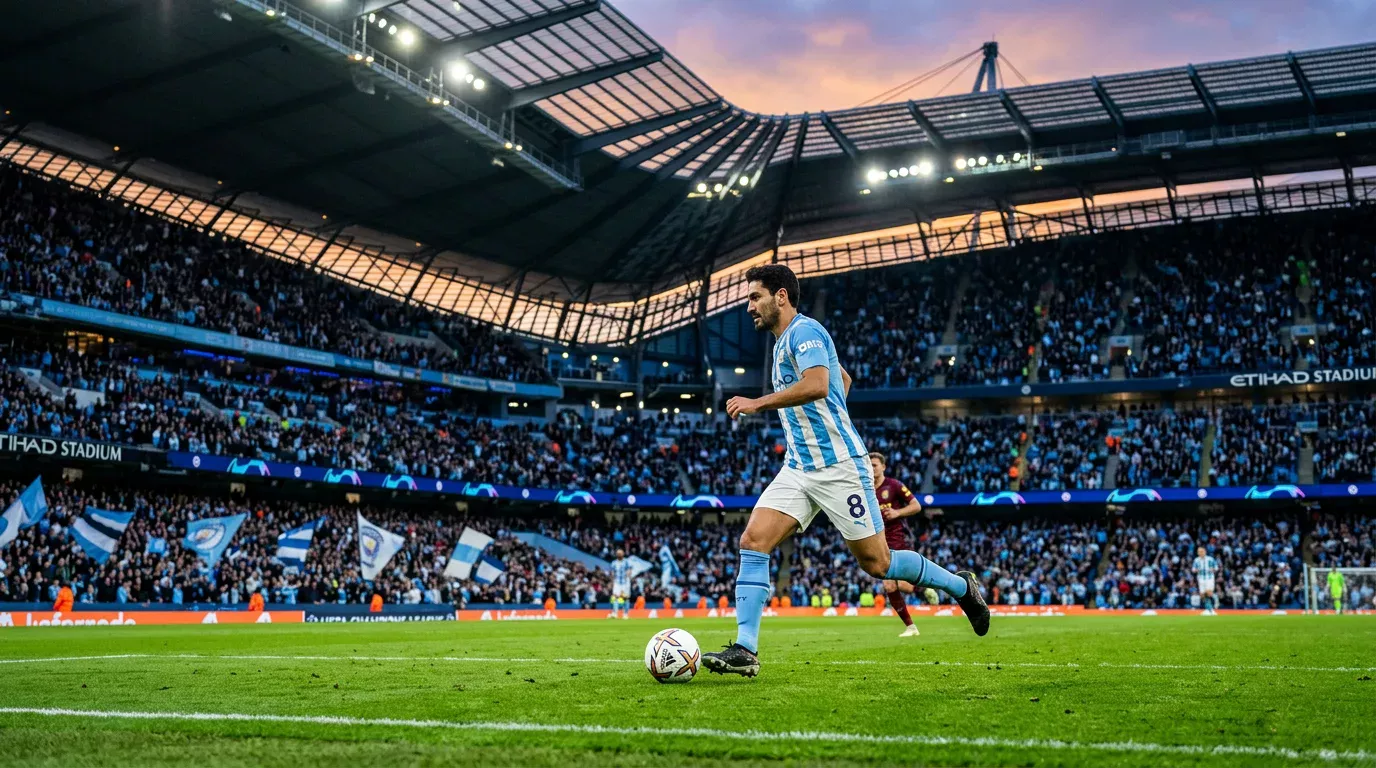
Lusail, 18 December 2022. Lionel Messi lifts the trophy, the tears flow, and an entire nation exhales after thirty-six years of waiting. That image defined a generation and changed Argentina’s relationship with international football overnight. Now the question that hangs over the 2026 World Cup is whether Argentina can do what no team has managed since Brazil in 1962: retain the title. The defending champions arrive in North America with shorter odds than any previous holder — around 4/1 in most outright markets — and a squad that blends the golden-generation survivors with a new wave of talent that Lionel Scaloni has integrated with remarkable patience. I have followed Argentina’s betting markets closely since Qatar, and the picture is more nuanced than the odds suggest. The squad is deeper, the system is proven, but history says defending the World Cup is the hardest thing in football.
Argentina’s Qualification Campaign
A six-goal thriller in Buenos Aires. A backs-to-the-wall draw in Bogotá at 2,600 metres above sea level. A routine demolition of Peru that became anything but routine when the visitors scored twice in five second-half minutes. CONMEBOL qualifying is chaos distilled into ninety-minute packages, and Argentina navigated it with the consistency of a side that knows exactly what it is. They topped the table with 42 points from eighteen matches — fourteen wins, no defeats, and four draws that each came away from home in the most hostile environments South American football can offer.
The numbers were emphatic. Argentina scored 38 goals and conceded just nine, giving them both the best attack and the best defence in the CONMEBOL standings. The home record was perfect: nine wins from nine, with a goal difference of +27. Away from Buenos Aires, the results were tighter — five wins and four draws — but the point total was still sufficient to qualify with three matches to spare. No other CONMEBOL nation achieved automatic qualification that early in the cycle.
What impressed me most was the seamlessness of transition. Several players from the 2022 squad have aged out or been phased into reduced roles, yet the team’s identity — aggressive pressing, quick transitions, and a midfield that controls tempo without sacrificing verticality — remained intact throughout. Scaloni’s management of the generational shift deserves more credit than it typically receives in European media. He did not dismantle a winning team; he evolved it, and the qualifying results validate that approach entirely.
The depth of the squad was tested repeatedly during qualifying. Injuries to key players forced Scaloni to deploy different combinations in midfield and attack across the eighteen matches, and the results barely fluctuated. When Fernández missed three matches through injury, Mac Allister stepped into the deeper role and Argentina won all three. When Álvarez was rested for the Peru fixture, his replacement scored twice. This adaptability — the ability to lose a key player and continue performing at the same level — is the mark of a genuinely elite international squad, not one built around a handful of stars.
One statistical detail stands out for punters: Argentina won eight of their eighteen qualifiers by a single goal. That suggests a team comfortable in tight matches, capable of grinding out results when the spectacular is not available. In tournament football, where margins are razor-thin and a single goal often decides a knockout tie, that mentality is invaluable. It also means Argentina’s matches tend to produce fewer goals than Brazil’s, which has implications for over/under markets in the group stage.
Key Players — Life After Messi’s Peak?
The elephant in the room is 38 years old, plays in Major League Soccer, and will almost certainly be named in the squad. Messi’s role at the 2026 World Cup will be fundamentally different from 2022, and every punter needs to understand what that means before placing a bet. He is no longer the player who drags a team through a tournament on the force of individual brilliance. His minutes at Inter Miami have been managed carefully throughout the 2025-26 season, with regular rest periods and a reduced training load. The legs that carried Argentina through seven matches in Qatar cannot sustain the same workload four years later.
Scaloni will use Messi as an impact substitute or a starter in specific fixtures where his intelligence and passing range can unlock a deep-lying defence. The captain’s armband carries enormous psychological weight, and his mere presence in the squad — on the bench, in the dressing room, walking onto the pitch for the final twenty minutes of a quarter-final — lifts the entire group. But Argentina’s World Cup 2026 campaign will not be built around Messi the way 2022 was. It will be built around the players who have spent the past three years absorbing his winning mentality and translating it into their own performances.
Julián Álvarez has emerged as Argentina’s most important attacking player since Qatar. At Atlético Madrid, he has developed a ruthlessness in front of goal that was not always evident during his Manchester City spell, and his qualifying numbers — eleven goals in fourteen appearances — mark him as a genuine Golden Boot contender. Álvarez’s work rate without the ball is extraordinary for a centre-forward: he presses from the front with an intensity that sets the tone for Argentina’s entire defensive structure. If Argentina win the World Cup 2026, Álvarez will be the player who carries them, not Messi.
Enzo Fernández has matured into one of the finest midfielders in world football. His passing range — short, long, through balls, switches of play — gives Argentina a metronome in the centre of the pitch who can dictate the rhythm of any match. At Chelsea, his development was initially bumpy, but the past eighteen months have seen him establish himself as the first name on the teamsheet for both club and country. His partnership with Alexis Mac Allister, who provides the dynamism and box-to-box running that Fernández’s more measured game requires alongside it, is the best central midfield pairing at the tournament.
On the flanks, Nicolás González and the emerging talent of Alejandro Garnacho give Scaloni options that range from the experienced to the explosive. Garnacho’s pace and directness make him an ideal impact substitute in matches where Argentina need to stretch a tiring defence, while González’s tactical discipline and defensive contribution make him the more likely starter in knockout fixtures against elite opposition. The depth in wide positions is a genuine strength — Argentina can change the profile of their attack without compromising the structure behind it.
Defensively, Cristian Romero and Lisandro Martínez form a centre-back partnership that combines aggression with intelligence. Both are Premier League-based, both are comfortable on the ball, and both bring an intensity in the challenge that deters opponents from playing through the middle. The full-back positions are less settled, but Nahuel Molina’s overlapping runs from right-back add a creative dimension that few other nations can replicate from that position.
Group J — Algeria, Austria, Jordan
If you designed a group specifically to allow the defending champions a gentle opening to the tournament, it would look a lot like Group J. Argentina are overwhelming favourites to top the group, and the odds reflect that: around 1/4 to finish first, which is the shortest price for any group winner at the tournament. The question is not whether Argentina qualify — it is whether they do so with maximum points, minimum physical exertion, and their best players fit for the knockout rounds.
Algeria are the strongest of the three opponents, with a squad that blends European-based professionals with domestic-league players who bring a physicality and directness that can unsettle more technical sides. Their qualifying campaign from the CAF region was competent, and the Algerian diaspora in France means several squad members play at a high level in Ligue 1 and Ligue 2. Against Argentina, Algeria will likely sit deep, defend in a compact block, and try to exploit transitions through their rapid wide players. It is a strategy that can produce results against complacent favourites, but Argentina under Scaloni are rarely complacent.
Austria bring structure and discipline from a competitive UEFA qualifying group. Their pressing game, honed under Ralf Rangnick’s tactical approach, is among the most intense in European football, and the energy they commit to winning the ball back high up the pitch could cause Argentina problems if the South Americans attempt to play out from the back at a leisurely pace. The Austria-Argentina match is the one most likely to produce a competitive, tight fixture — I would not be surprised by a 1-0 or 1-1 result. The odds on a draw in that match, typically around 3/1, represent fair value.
Jordan are one of four debutants at this World Cup, and their presence in the tournament is a remarkable achievement for a nation that has never previously qualified. Their squad lacks the depth and individual quality to compete with Argentina over ninety minutes, but the emotional energy of a first World Cup appearance should not be underestimated. Upsets happen at every tournament, and Jordan’s defensive organisation throughout Asian qualifying suggests they will not be easy to break down. Argentina should win, but the margin of victory is less certain than the match result.
For Irish punters, Group J is not one you will be watching for the drama of the results — Argentina’s dominance is too predictable for that. But the betting markets within the group offer some interesting angles. Argentina to win all three matches without conceding is priced around 7/2, and their defensive record in qualifying — nine goals in eighteen matches — makes that a plausible outcome against three opponents who collectively lack the attacking firepower to threaten a well-organised back four. The alternative is Argentina to win the group with a goal difference of +7 or more, which would require comfortable victories in all three fixtures.
The Weight of the Crown — Can They Retain It?
No team has successfully defended the World Cup title since Brazil in 1958 and 1962. France came closest in 2022, reaching the final in Qatar only to lose on penalties to Argentina. Germany were eliminated in the group stage as defending champions in 2018. Spain lasted until the Round of 16 in 2014. Italy did not even qualify for the 2010 tournament after winning in 2006. The pattern is clear: defending the World Cup is not just difficult — it is historically close to impossible.
The reasons are varied but consistent. The defending champion enters every match as the marked team, with opponents raising their game by 10-15% simply because of the prestige of beating the holders. The psychological burden of expectation — the weight of a nation assuming the trophy will be retained — adds a layer of pressure that qualification campaigns and friendlies cannot replicate. And the natural cycle of squad renewal means that the team defending the title is never quite the same team that won it.
Argentina’s case for breaking this pattern rests on three pillars. First, Scaloni has managed the squad transition more effectively than any previous defending champion’s manager. The core of the 2022 team remains — Fernández, Álvarez, Romero, Martínez, Mac Allister — while the additions have been integrated gradually rather than thrown in as emergency replacements. Second, the tactical identity is rock-solid. Argentina play the same way regardless of the opponent, and that consistency breeds the kind of collective confidence that individual talent alone cannot provide. Third, the memory of Qatar is still fresh enough to serve as motivation but distant enough to avoid the trap of trying to recreate a specific tournament rather than approaching each match on its own terms.
The counter-argument is equally strong. Messi’s diminished role removes the safety net that Argentina relied on in 2022 — the knowledge that their greatest-ever player could produce a moment of magic in any match. Without that insurance, Argentina become a very good team rather than a transcendent one. Very good teams do not always win World Cups. They reach semi-finals, they compete in finals, and sometimes they lose to a side that peaks at exactly the right moment. At 4/1, the market prices Argentina as having roughly a 20% chance of retaining the title. I think the true probability is closer to 15%, which makes them marginally overvalued in the outright market.
Scaloni’s System — What Makes This Argentina Tick
Every great tournament side has a clear tactical identity, and Argentina’s under Scaloni is defined by controlled aggression. The base formation is a 4-3-3 that shifts to a 4-4-2 when defending, with the wide forwards dropping into midfield to form a compact shape that denies space between the lines. The transition from defence to attack is rapid and direct — Argentina average fewer than four seconds from winning the ball to entering the opponent’s half, one of the fastest transition speeds recorded in international football during the current qualifying cycle.
The pressing is coordinated and relentless. Argentina’s front three press as a unit, triggered by a backward pass or a goalkeeper receiving the ball. The midfield three follow within two seconds, compressing the pitch and forcing errors. This high-intensity approach requires exceptional fitness levels, which is why Scaloni has prioritised physical conditioning throughout the qualifying campaign and why the squad selection will lean toward players who can sustain this effort across seven matches in thirty-nine days.
In possession, Argentina build through their midfield rather than playing long. Fernández and Mac Allister are both comfortable receiving the ball under pressure and playing forward passes into the final third, and the full-backs provide width that stretches the defensive line. The centre-forward — usually Álvarez — drops deep to create numerical advantages in midfield, then makes late runs into the box when the ball reaches the wide areas. This fluidity makes Argentina difficult to mark and difficult to predict, which is precisely the point. The best teams at any World Cup are the ones opponents cannot prepare for with a single game plan, and Argentina’s tactical versatility under Scaloni forces opponents into reactive football rather than proactive football.
Argentina’s Outright and Tournament Odds
At 4/1, Argentina are the second favourite in most outright markets behind Brazil. The price reflects their status as defending champions, their qualifying dominance, and the quality of their squad. But as I have outlined, the historical precedent for title defence is poor, and the transition away from Messi-dependency adds a layer of uncertainty that the odds do not fully account for.
The markets where I see genuine value are the “to reach the final” and “semi-final or better” propositions. Argentina to reach the semi-final is priced around evens, which I consider generous given their group draw and the likely knockout path from Group J. Topping the group should pit them against a third-place qualifier in the Round of 32 and a group runner-up in the Round of 16 — two matches that Argentina should win comfortably. The quarter-final is the first genuine test, and by that point, the tournament’s structure should have eliminated enough contenders to give Argentina a favourable draw. Semi-final at evens is the bet I would recommend to anyone asking for a single Argentina wager.
In player markets, Álvarez at 8/1 for the Golden Boot is the standout. His guaranteed starting role, Argentina’s expected deep run, and his clinical finishing make him a live contender to finish as the tournament’s top scorer. The each-way value at a quarter of the odds is strong — even if he finishes behind Mbappé or Vinícius in the final standings, a place payout at 2/1 would represent a solid return. His penalty-taking duties add an extra source of goals that pure open-play strikers do not have access to, and in a tournament where VAR will award more spot-kicks than most fans expect, that matters.
What Happens When the Music Stops
I predict Argentina reach the semi-final, where they face either Brazil or France. That fixture — defending champions against the most talented attacking squad or the deepest squad in the tournament — will define the 2026 World Cup regardless of who wins. Argentina have the tactical discipline and the big-match experience to win any single match at this tournament. Whether they have the sustained excellence to win seven matches across thirty-nine days, without the safety net of peak Messi, is the question I keep returning to.
My honest assessment: Argentina are a semi-final side. They will beat everyone in Group J, navigate the early knockout rounds without alarm, and reach the last four with a sense of inevitability. The semi-final is where the tournament becomes a coin flip, and Argentina’s coin has landed the right way up more often than most in recent years. If they get past the semi, they win the final — this is a team that does not lose its nerve in the decisive moment. But getting past the semi requires either outplaying Brazil in open play or outscoring France in a shootout, and neither scenario is one I would stake significant money on at current Group J odds.