
In-Play Betting at the World Cup 2026 — A Live Betting Primer
 Available in US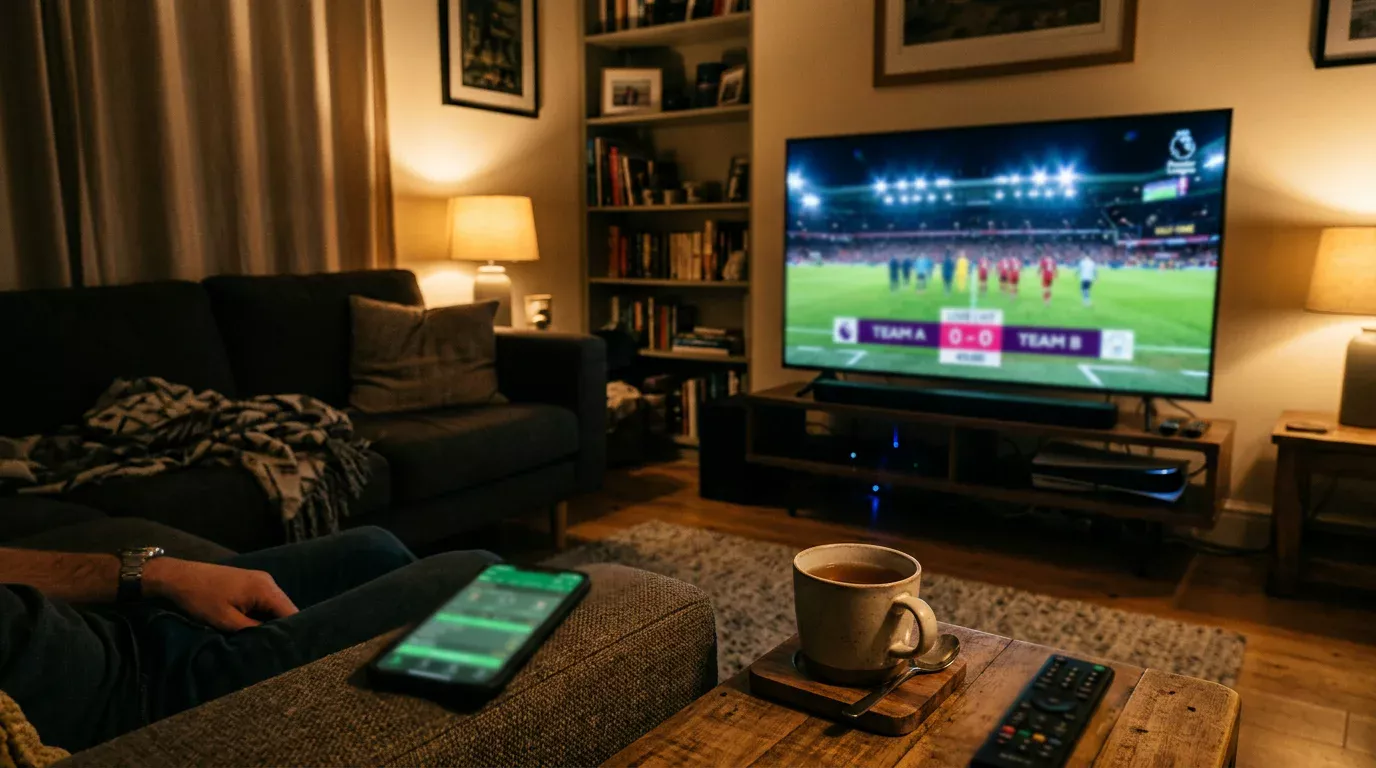
It’s 2am Irish time. You’re on the sofa, the curtains are drawn, and Mexico are 0-0 with South Korea at half-time in a Group A match that has no bearing on Ireland whatsoever. But you’re watching because the in-play odds on over 1.5 goals have just drifted to 5/4, and you know — from the first half pattern, from the way South Korea are pushing their full-backs forward, from the substitution Mexico’s manager made in the 40th minute — that this match is about to open up.
That moment, where observation meets opportunity, is the essence of world cup in-play betting. Pre-match markets are the domain of statistics and projection. In-play markets are the domain of the viewer — the person actually watching the match, reading its rhythm, and reacting faster than the algorithm that sets the odds. For the 2026 World Cup, with 104 matches spread across 39 days, in-play betting will account for more total turnover than pre-match markets. And for Irish punters watching from the unique vantage point of a five-hour time difference with the US East Coast, the in-play landscape has characteristics worth understanding before the tournament kicks off.
What Is In-Play Betting?
At the 2014 World Cup, I placed my first live bet. Netherlands vs Spain, the defending champions. Netherlands were 2-0 up at half-time in a match nobody expected to be a blowout. The in-play market on total goals shifted to over 4.5 at 11/8. I took it. Robin van Persie and Arjen Robben scored three more in the second half. Final score: 5-1. I won, and I’ve been hooked on in-play ever since.
In-play betting — also called live betting or in-running betting — is any wager placed after a match has started. The odds update continuously based on what’s happening on the pitch: goals, red cards, injuries, substitutions, corners, possession shifts. Every bookmaker’s in-play platform uses a combination of algorithmic pricing and human trading to adjust odds in real time. When a goal is scored, the 1X2 market suspends briefly, recalculates, and resumes with new prices. When a red card is shown, the market for total goals shifts upward because historically, matches with red cards produce more goals than matches without.
The range of in-play markets has expanded dramatically since 2014. At the 2026 World Cup, you’ll be able to bet live on match result, next goalscorer, time of next goal, number of corners in the next ten minutes, number of cards, Asian handicaps, correct score, and dozens of micro-markets that update every few seconds. The depth of choice can be overwhelming, which is why most successful in-play bettors focus on two or three markets they understand well rather than spreading across everything available.
Why In-Play Works Differently at a World Cup
Club football in-play betting follows predictable patterns because you see the same teams play 50 or 60 matches a season. You know how Manchester City respond to going a goal behind. You know Liverpool’s intensity drops in the final 15 minutes if they’re two goals up. You have data. Lots of it.
International tournament football strips that advantage away. National teams play together for a few weeks every two years, and the tactical cohesion that develops over a club season simply doesn’t exist at the same level. This creates more volatility in matches — more unexpected momentum swings, more tactical mismatches that take 30 minutes to become apparent, more managers making reactive substitutions that change the shape of a match at half-time.
That volatility is an in-play bettor’s best friend. When a match doesn’t follow its expected script, the algorithm that sets in-play odds takes time to adjust. It prices based on historical patterns — “teams that are 1-0 up at half-time in World Cup group stage matches win 74% of the time” — but it can’t account for the specific tactical adjustment a manager has just made, the fatigue that’s visibly affecting a midfield, or the crowd energy that’s pushing the underdog forward. If you’re watching the match and the algorithm isn’t, you have an edge.
The 2026 format amplifies this effect. The Round of 32 is entirely new, and there’s no historical data for how teams behave in this specific knockout round. Are they cautious because they’ve just scraped through as a third-placed team? Or are they liberated because reaching the knockouts exceeded expectations? The algorithms will be guessing, and your eyes on the match will be more valuable than any model for at least the first few days of the knockout rounds.
Best In-Play Markets for World Cup Matches
Not all in-play markets are equally profitable. Some are efficient — the odds closely reflect the true probability — and others are sluggish, creating windows of value that last anywhere from 30 seconds to several minutes.
The next goal market is where I’ve had the most consistent returns at previous tournaments. This market asks simply: which team scores the next goal, or will there be no more goals? The odds update after every significant event (goal, red card, substitution), but they’re slow to react to tactical shifts that aren’t reflected in the scoresheet. If a manager brings on a second striker at the 60th minute and switches from a 4-3-3 to a 4-4-2, the next goal odds won’t change significantly — but the probability of that team scoring next has just increased. If you’re watching the match and you see the tactical shift before the market prices it, you have a window.
Over/under goals markets during the second half of group stage matches are another sweet spot. The pattern at World Cups is consistent: group stage matches that are 0-0 or 1-0 at half-time tend to produce goals in the second half as teams chase results. The over 1.5 match goals line, which might be priced at around 1/3 pre-match for a match between a favourite and an underdog, can drift to 11/8 or higher at half-time if the first half was goalless. That’s a significant price shift for a market where the second-half data strongly favours the over.
Corner markets are underused by most punters but can be extremely profitable for those who understand the patterns. When a team is chasing a goal in the final 20 minutes, they push players forward, deliver more crosses, and generate more corners. The “over X corners in the match” market often doesn’t fully price in this late-game urgency, particularly in knockout matches where extra time is a possibility. If a match is 1-0 in the 70th minute and the trailing team has just made attacking substitutions, the over on total corners becomes increasingly attractive.
I’d steer clear of the correct score market in-play unless you have a very specific read on a match. The odds look attractive — a 2-1 correct score at 7/1 can feel like a steal when a match is 1-0 at the 60th minute — but the number of possible outcomes makes this a low-probability market even when the current score seems to point in a specific direction.
Late-Night Matches and the IST In-Play Advantage
Here’s something most Irish pundits won’t tell you: the time difference between Ireland and the US East Coast creates an unusual advantage for in-play bettors based in IST.
Matches kicking off at 8pm or 9pm ET translate to 1am or 2am Irish time. That means you’re watching in a quiet house, with zero distractions, fully focused on the match. The pub crowd that creates noise and peer pressure during a 3pm Saturday kick-off isn’t there. The WhatsApp group pinging every two minutes with bad takes isn’t active. It’s you, the match, and the in-play market. That environment is ideal for making disciplined, analytical in-play decisions.
There’s a second, more subtle advantage. The majority of betting volume on World Cup in-play markets comes from European and American bettors. European bettors are largely off the market by 2am — they’ve gone to bed. American bettors are active but tend to focus on domestic markets (NFL, NBA, MLB) and treat World Cup in-play as a secondary activity. The result is thinner markets with less sophisticated pricing during late-night IST matches, which can create wider value windows for those willing to stay up.
I’m not suggesting you sacrifice your sleep for 39 consecutive nights. But if you’re going to pick your spots for in-play betting at the 2026 World Cup, the late-night IST matches — particularly the ones featuring strong favourites against weaker opponents, where the probability of a second-half goal surge is high — are where the opportunities will be richest. Set an alarm, watch the first half on your phone, and if the match develops as expected, place your in-play bet during the half-time break. Then go back to sleep. Or don’t. The World Cup only comes around every four years.
Five In-Play Tips for Tournament Football
Tip one: watch the match, don’t just watch the odds. This sounds painfully obvious, but a significant percentage of in-play bets are placed by people following the odds movements on an app without actually watching the game. The odds reflect what has happened. Your eyes tell you what’s about to happen. The gap between those two things is where profit lives.
Tip two: wait for the 60th minute in tight matches. The first 60 minutes of a World Cup match often follow a predictable pattern: both teams are cautious, managers haven’t made substitutions yet, and the match is “waiting to happen.” The last 30 minutes (plus stoppage time, which at the 2022 World Cup averaged over 10 minutes) is where the action concentrates. Substitutions change the dynamic, tiredness creates spaces, and teams that need a result take risks. If you’re going to place one in-play bet per match, placing it after the 60th minute is statistically the most favourable timing.
Tip three: track substitution patterns during the group stage. By matchday two, you’ll know how each manager uses substitutions — who brings on attackers when chasing, who makes defensive changes to protect a lead, who empties the bench in the final 15 minutes. This information is gold for in-play betting in the knockout rounds, where the same patterns will repeat under higher pressure.
Tip four: don’t chase in-play. The biggest in-play mistake is emotional — you lose a pre-match bet and immediately open the in-play market on the next match to “make it back.” In-play requires calm assessment and patience. If you’ve lost three in-play bets in a row, step away from the app and watch the next match for enjoyment rather than profit. The betting guide has more on responsible staking strategies, and they apply doubly to in-play.
Tip five: use cash-out selectively. Most bookmakers offer a cash-out option on in-play bets, allowing you to take a profit (or limit a loss) before the market settles. Cash-out can be a useful risk management tool, but it’s often priced unfavourably — the bookmaker takes a margin on the cash-out price. Use it when the tactical situation has changed against you (a key player gets injured, a red card reshapes the match), not when you’re simply nervous about your bet. Nervousness is a feeling. Changed conditions are a reason.
