
Netherlands at the World Cup 2026 — Oranje’s Odds & Squad Guide
 Available in US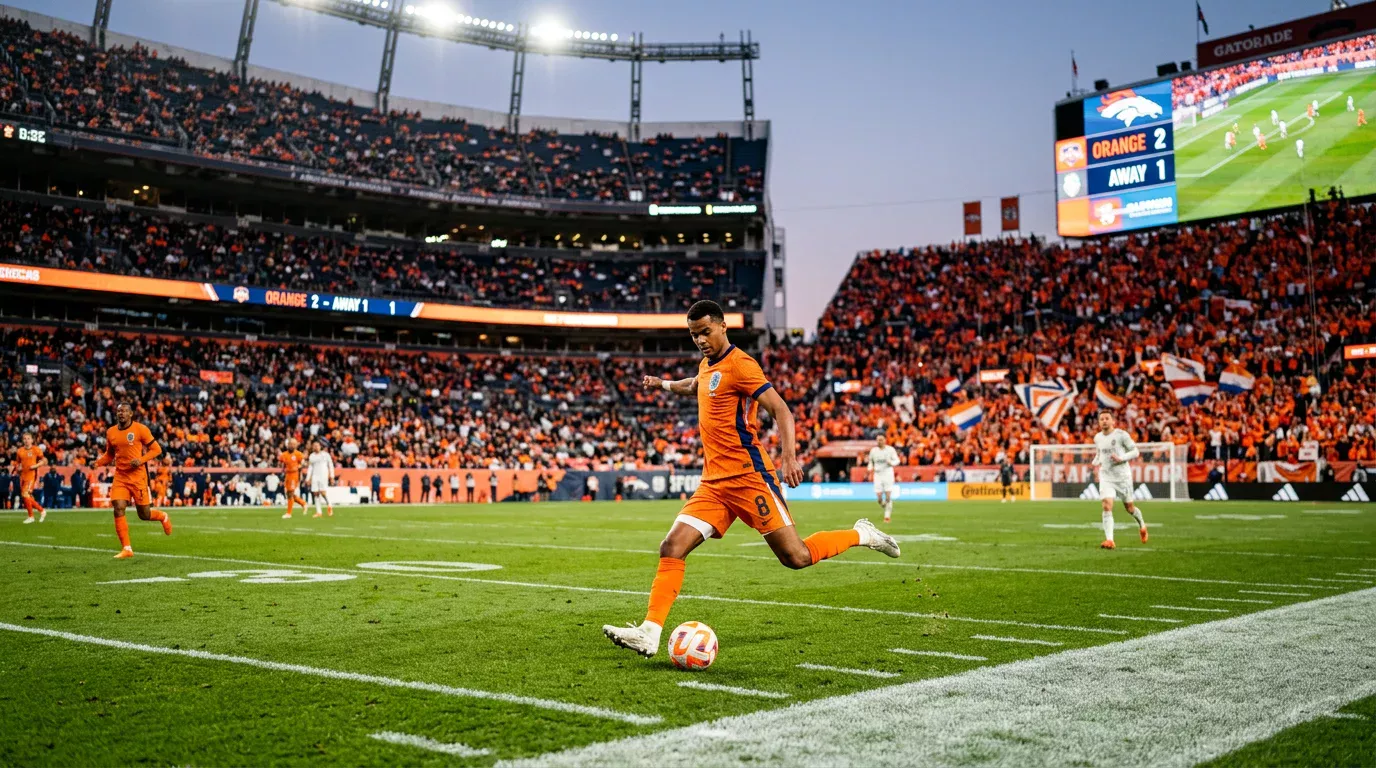
Total football. Cruyff turns. Three World Cup finals without a single victory. The Netherlands are the most romantically frustrating team in the history of international football — a nation that has produced some of the sport’s greatest players and most innovative tactical ideas, yet has lifted the World Cup trophy precisely zero times. Oranje arrive at the 2026 World Cup priced around 14/1 in most outright markets, a price that reflects both their undeniable quality and their equally undeniable tendency to fall short at the final hurdle. I find the Netherlands endlessly fascinating from a betting perspective because they occupy a unique position in the market: too good to ignore, too unreliable to trust. Let me break down why.
How the Netherlands Qualified
The Netherlands qualified through UEFA Group C, finishing second behind France on 20 points from ten matches. The campaign was defined by a single result: the 1-0 home victory over France in Amsterdam — one of the most atmospheric European qualifying matches in years — that briefly gave the Dutch hope of topping the group before a stumble against Hungary in Budapest brought them back to earth. Six wins, two draws, and two defeats constituted a solid if uneven body of work, and the goal difference of +14 placed them comfortably among the qualified European nations.
The concerns were defensive. The Netherlands conceded twelve goals in ten qualifiers — a rate that would have been considered unacceptable by previous generations of Dutch coaches, and one that sits uncomfortably alongside the attacking output of 26 goals. The balance between attack and defence has been a persistent theme throughout the current coaching cycle, and the qualifying campaign did little to resolve it. In three of their six victories, the Netherlands conceded first before recovering, which speaks to mental resilience but also to an organisational fragility that opponents will exploit at the World Cup.
Away from home, the Dutch won just two of five qualifiers, drawing one and losing two. The defeats came in France and Hungary — both matches where the opposition’s pressing intensity overwhelmed the Dutch midfield and created chance after chance through the centre. For a team that prides itself on controlling possession, the inability to retain the ball under sustained pressure in away fixtures is a red flag. At the World Cup, where every match is effectively an away game, this vulnerability could prove costly against teams that press with the intensity of France or Spain.
Key Players for Oranje
Virgil van Dijk is 35 and entering what is almost certainly his last major tournament. His influence on this Dutch squad extends far beyond his defensive contributions — he is the captain, the emotional leader, and the player whose presence organises the entire backline. At Liverpool, his form during the 2025-26 season has been remarkably consistent for a centre-back of his age, though the pace that once allowed him to recover from positional errors has diminished noticeably. Van Dijk’s aerial dominance, reading of the game, and passing from deep remain elite, but the question for punters is whether a 35-year-old centre-back can sustain the physical demands of seven matches across thirty-nine days in the North American summer. I lean toward yes — his fitness management at Liverpool has been excellent — but it is a risk that the outright odds may not fully account for.
Cody Gakpo has emerged as the Netherlands’ most important attacking player, and his development since the 2022 World Cup — where he scored three group-stage goals — has been substantial. At Liverpool, he has evolved from a raw wide attacker into a complete forward who can play across the front line, contribute defensively, and produce decisive moments in the biggest matches. His qualifying campaign yielded six goals and four assists in nine appearances, including a hat-trick against Finland that showcased his finishing ability from both open play and set pieces. Gakpo’s combination of pace, dribbling, and shooting accuracy makes him a genuine Golden Boot contender if the Netherlands progress deep into the tournament.
Xavi Simons adds a creative spark from the number-ten position that the Netherlands have not possessed since the peak years of Wesley Sneijder. His ability to receive the ball between the lines, turn, and play a final ball into the box gives the Dutch attack a dimension that was missing during the defensive-minded approach of previous tournaments. At Paris Saint-Germain and then on loan at RB Leipzig, Simons has developed an end product — goals and assists in double figures across the season — that converts his obvious talent into tangible output. The Gakpo-Simons partnership, with one making runs in behind and the other finding the pass, is the most potent attacking combination the Netherlands have sent to a World Cup since Robben and Van Persie in 2014.
In midfield, Frenkie de Jong’s fitness is the single most important non-tactical factor in the Netherlands’ World Cup campaign. When fit, De Jong is one of the best ball-progressing midfielders in world football — a player who receives the ball under pressure and glides past opponents with a combination of close control and spatial awareness that very few players can replicate. When unfit, or carrying a niggling injury that restricts his movement, the Netherlands lose the ability to play through the press and become reliant on longer passes that reduce their attacking precision. De Jong’s injury history over the past two seasons — hamstring and ankle problems that have limited his Barcelona appearances — is the risk factor that keeps the Netherlands’ odds at 14/1 rather than 10/1.
The goalkeeping position belongs to Bart Verbruggen, who has established himself as the undisputed number one after an impressive season at Brighton. At 23, he brings a composure and shot-stopping ability that belies his age, and his distribution — both short and long — suits the Netherlands’ possession-based approach. Verbruggen’s emergence has resolved one of the few genuine weaknesses in the Dutch squad and provides a foundation of reliability that the outfield players can build upon.
Group F — Japan, Sweden, Tunisia
Group F is one of the most competitive at the tournament, and the Netherlands cannot afford complacency against any of their three opponents. Japan are the most dangerous — a squad that has evolved from plucky underdogs into genuine contenders, capable of beating any European side on their day. Their 2022 World Cup campaign, which included victories over Germany and Spain in the group stage, demonstrated a tactical sophistication and collective intensity that few expected. The Netherlands-Japan fixture is the match that will determine who tops the group, and I expect a tight, cagey affair. Japan’s pressing will test the Dutch backline’s composure, and their counter-attacking speed through the flanks could expose Van Dijk’s declining pace. A draw at around 5/2 carries genuine appeal.
Sweden qualified through the UEFA playoffs, beating Poland 3-2 in a dramatic semi-final that went to the final minutes. Their squad blends experienced Allsvenskan-based players with a core of talent at top European clubs, and their tactical approach under their current manager emphasises defensive solidity and physical football. Against the Netherlands, Sweden will press aggressively in midfield and look to win second balls — an approach that has historically caused the Dutch problems when their passing game is disrupted. The Netherlands should win, but a 1-0 or 2-1 scoreline is more likely than a comfortable victory.
Tunisia bring organisation and defensive discipline, with a squad that competed credibly at the 2022 World Cup. Their draw with Denmark and narrow defeat to France in Qatar showed a team capable of frustrating more talented opponents, and their qualification from the CAF region was achieved with the best defensive record on the continent. The Netherlands will dominate possession against Tunisia, but creating clear chances against a deep-sitting, compact back five is never straightforward. The over/under 2.5 goals line in this fixture will be tight, and I would lean toward the under at even money.
My predicted finishing order: Netherlands first, Japan second, Sweden third, Tunisia fourth. But this is the group where I have the least confidence in my predictions — Japan topping the group is a genuinely plausible outcome, and Sweden finishing above Japan is equally possible. For betting purposes, the exact finishing positions market in Group F is a lottery, and I would steer toward individual match bets rather than group outcome markets.
Are the Netherlands a Dark Horse or a Genuine Contender?
This is the question that defines the Netherlands’ World Cup 2026 campaign, and the answer depends entirely on which version of Oranje turns up. At their best — when De Jong is fit, Van Dijk is commanding, Gakpo is clinical, and Simons is creating — the Netherlands can beat any team at the tournament. Their attacking talent is comparable to the top four favourites, and their tactical flexibility under the current manager allows them to adjust between possession-based control and direct counter-attacking football depending on the opponent.
At their worst — when the defensive organisation breaks down, when the midfield is bypassed by a high press, when individual errors at the back gift opponents cheap goals — the Netherlands look like a side capable of exiting in the Round of 32. The gap between their best and worst performances during qualifying was wider than for any other European qualifier, and that inconsistency is the primary reason their odds remain at 14/1 rather than the 8/1 or 10/1 that their talent merits.
The dark horse label feels appropriate but insufficient. A genuine dark horse is a team that overperforms relative to expectations — Croatia in 2018, Morocco in 2022. The Netherlands do not overperform. They perform at exactly the level their talent suggests, then lose in the quarter-final or semi-final through a combination of bad luck, defensive errors, and the psychological weight of never having won the trophy. At 14/1, the market prices in both the talent and the heartbreak. I think the price is about right — not value, not overpriced, but a fair reflection of a team that has a 7% chance of winning the tournament and a 25% chance of reaching the semi-final.
Our Prediction
Quarter-final exit. The Netherlands will navigate Group F — probably finishing first, possibly second — and beat their Round-of-32 opponent comfortably. The Round of 16 will be competitive but winnable. The quarter-final, likely against Brazil, France, or Spain, is where the journey ends. The pattern is too consistent to ignore: the Netherlands reach the last eight at virtually every tournament they compete in, then lose to a team with more experience, more composure, and fewer existential doubts about whether destiny is working against them.
For Irish punters, the Netherlands are the team to watch with a beer in hand rather than a betting slip in your pocket. Gakpo and Simons are entertaining, Van Dijk’s last World Cup carries emotional weight, and the perpetual Dutch drama of “is this finally the year?” adds a narrative layer that no other mid-tier contender can match. If you must bet on Oranje, back them to reach the quarter-final at around 4/6 and enjoy the ride. If you want outright value, look elsewhere. The Group F dynamics offer better betting opportunities than the Netherlands’ outright market.
