
World Cup History and Stats — Numbers Every Punter Should Know
 Available in US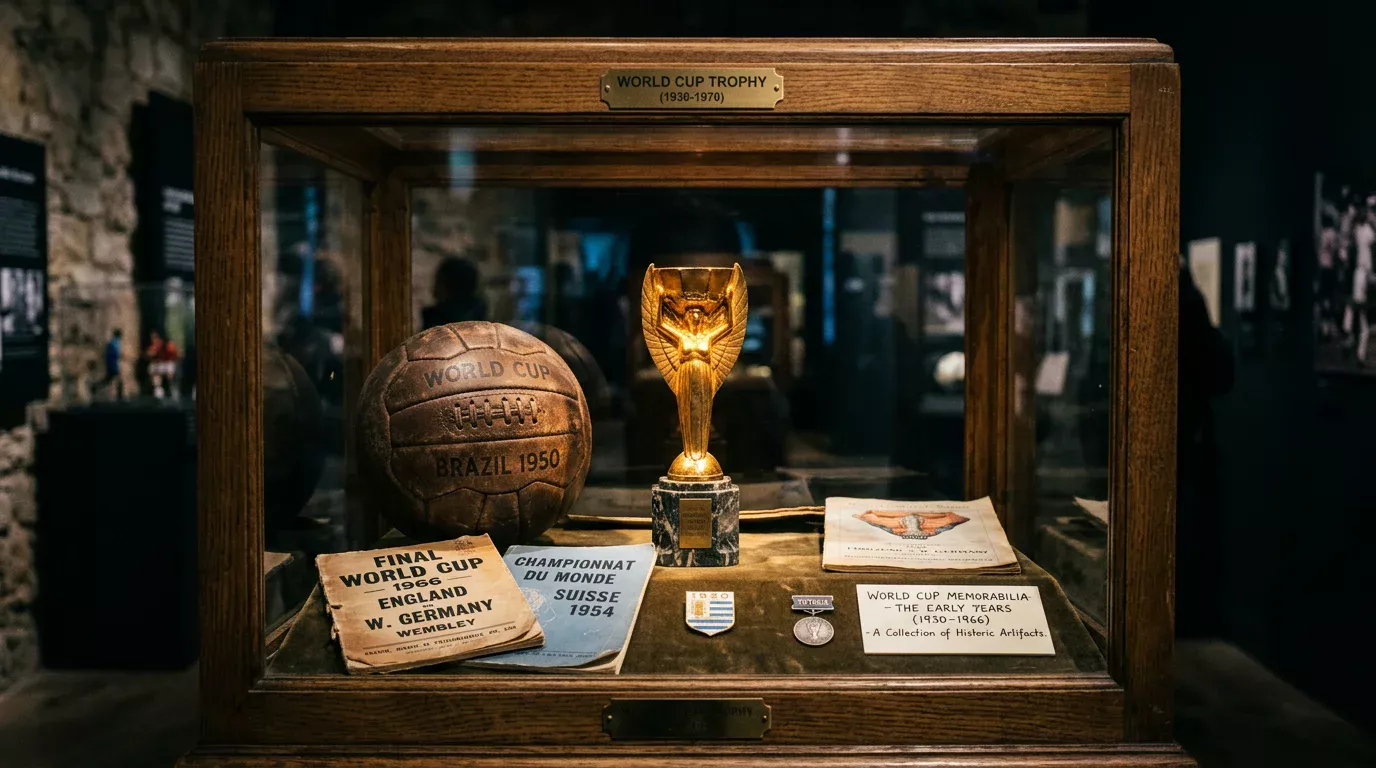
History doesn’t repeat at the World Cup. But it rhymes — and if you know the patterns, you can bet on the rhymes. I’ve pulled apart 92 years of World Cup data looking for the statistical tendencies that hold across eras, formats, and continents. Some of what I found confirmed what most punters already assume. Some of it didn’t. And a handful of these numbers will directly shape how I approach the 2026 tournament markets.
This isn’t a nostalgia trip. Every stat on this page is here because it has a practical application for anyone betting on the World Cup in June and July. If a number doesn’t help you make a sharper bet, I’ve left it out. What remains is a distillation of world cup history stats into the patterns that actually matter when you’re deciding where to put your money.
All-Time World Cup Winners — Who’s Lifted It Most?
A pub quiz question that every football fan can answer, but fewer can answer with the context that matters for betting. Brazil have won the World Cup five times (1958, 1962, 1970, 1994, 2002). Germany and Italy have four titles each. Argentina have three (1978, 1986, 2022). France and Uruguay have two apiece. England and Spain round out the winners’ list with one title each.
Here’s the stat that most punters miss: of the eight nations that have ever won a World Cup, seven are in the 2026 tournament. Italy are the exception — they were knocked out in the UEFA playoff by Bosnia and Herzegovina in March 2026. That means the historical winners’ circle is almost fully represented, and the market prices reflect it. The seven former champions account for approximately 75% of the total implied probability in the outright winner market. The remaining 41 teams share 25%. History concentrates success, and the bookmakers know it.
But concentration doesn’t mean exclusion. Spain won their first World Cup in 2010 after decades of underperformance. France broke through in 1998. The pool of winners has expanded in recent decades, and the 2026 tournament — with 48 teams and more knockout rounds than ever — creates more pathways for a new name to emerge. Morocco, who reached the 2022 semi-finals, and Colombia, who were Copa América finalists in 2024, are the most likely candidates to become the ninth nation to win a World Cup. The odds on either are long (33/1 and 25/1 respectively), but history shows that new winners do emerge — just not very often.
One more data point: no team outside of Europe or South America has ever won the World Cup. Twenty-two tournaments, and every single champion has come from one of those two continents. The USA, Mexico, Japan, South Korea, Senegal, Morocco — all have legitimate ambitions for a deep run in 2026, but none has the historical precedent of actually winning the thing. That pattern is worth bearing in mind when you see attractive prices on non-European, non-South American teams in the outright market.
Tournament Trends That Shape Your Bets
Between the 2014 and 2022 World Cups, I tracked a set of recurring patterns that held with remarkable consistency. These aren’t cherry-picked anomalies — they’re tendencies that have persisted across different host nations, climates, and tactical eras.
Goals per match have remained remarkably stable. The average across the last six World Cups (2002-2022) is 2.58 goals per match, with a range of 2.27 (2006) to 2.69 (2022). This stability suggests that the over/under 2.5 goals line, which bookmakers set as the standard for most World Cup matches, is well calibrated for group stage matches between evenly matched teams. Where the value lies is in matches with a significant quality gap — Germany vs Curaçao, France vs Iraq, Argentina vs Jordan — where the goals-per-match average historically jumps to 3.2 or higher. If you’re betting over/under on group stage matches, target the mismatches rather than the evenly-contested fixtures.
Draws in the group stage occur in roughly 24-26% of matches across recent World Cups. That’s almost exactly one in four. Bookmakers tend to price group stage draws at around 12/5 to 3/1, which implies a 25-29% probability — closely aligned with the historical rate. This means draws are generally fairly priced in the group stage market, and finding value on draws requires match-specific analysis rather than a blanket approach.
Red cards have declined significantly. The 2006 World Cup produced 28 red cards across 64 matches (0.44 per match). The 2022 World Cup produced just four red cards across the same number of matches (0.06 per match). The introduction and refinement of VAR, changes to refereeing guidelines, and a cultural shift away from cynical fouling have all contributed to this decline. For the 2026 tournament, any prop bet on total red cards should factor in this downward trend — bookmakers who set their line based on historical averages from pre-VAR tournaments will be overpricing the over.
Extra time in knockout matches is more common than you’d think. Across the last four World Cups (2010-2022), approximately 30% of knockout matches have gone to extra time. That’s nearly one in three. This stat is directly relevant for in-play bettors and for anyone considering the “match to go to extra time” prop market. In matches between evenly-ranked knockout opponents, the over on this market — which is typically priced around 11/4 — represents consistent value based on the historical data.
How Host Nations Have Performed Historically
I pulled the records of every host nation at every World Cup since 1930, and the pattern is unmistakable: hosting gives you a measurable boost. But the size of that boost depends on who you are.
Of the 22 World Cups held so far, six have been won by the host nation (Uruguay 1930, Italy 1934, England 1966, West Germany 1974, Argentina 1978, France 1998). That’s a 27% win rate for hosts, compared to the base rate of roughly 6% (one in 16 or 24 or 32 teams, depending on the era). Hosting approximately quadruples your chances of winning. The effect diminishes at recent tournaments, though — no host has won since France in 1998, and the last three hosts (Brazil 2014, Russia 2018, Qatar 2022) all underperformed their pre-tournament expectations.
The minimum benchmark for a host nation is reaching the knockout rounds. Only one host has ever been eliminated in the group stage: South Africa in 2010. Every other host has reached at least the Round of 16 (or its equivalent in older formats). For the 2026 World Cup, this means the USA should be considered a near-certainty to progress beyond the group stage. Mexico, with their long history of reaching the Round of 16 at World Cups, should follow suit. Canada, as the weakest of the three co-hosts, are the wild card — but even they benefit from home crowd support and zero travel fatigue.
The co-hosting factor is genuinely novel. The only previous co-hosted World Cup was 2002 (Japan/South Korea), where South Korea reached the semi-finals and Japan reached the Round of 16. Both hosts overperformed. In 2026, the hosting advantage is split three ways, and the matches are distributed across a vast geographic area (Vancouver to Mexico City is a 5,000km flight). The home advantage effect will be strongest for teams playing in their own country’s stadiums and weakest for teams playing in a co-host’s venue. The USA, with 11 of the 16 stadiums, capture the lion’s share of the hosting benefit.
Goals, Cards and Clean Sheets — Key Stats
Let me throw some numbers at you that directly inform specific betting markets.
Clean sheets in the group stage are surprisingly common. At the 2022 World Cup, 27 of 48 group stage matches (56%) saw at least one team fail to score. Defensive football thrives in the early rounds because teams prioritise not losing over winning — especially in the first match, when the stakes feel highest. If you’re betting on “both teams to score — no” in group stage openers, the historical data supports you. First matches of the group stage produce BTTS-no results at a rate of approximately 60%.
Penalty shootouts at World Cups follow a surprisingly consistent pattern. Since the shootout was introduced in 1982, the team that shoots first has won 57% of shootouts. That’s a statistically significant advantage, and it’s reflected in the coin toss that determines shooting order. For in-play bettors, knowing which team shoots first in a penalty shootout is a data point worth tracking, even if the edge is small.
Substitutes have scored in approximately 18% of World Cup matches across the last three tournaments. That percentage has increased steadily since FIFA allowed five substitutions, which remains the rule for the 2026 World Cup. The “substitute to score” market, where available, tends to be priced at around 4/1 per match. At a true probability of 18%, fair odds would be closer to 9/2 — meaning the market is actually reasonably efficient here. But in matches where a favourite is expected to chase the game in the second half and bring on fresh attacking players, the probability of a substitute scoring rises to 25% or higher, which makes the 4/1 price a genuine value bet in those specific contexts.
Stoppage time has increased dramatically. At the 2022 World Cup, the average stoppage time added at the end of each half was over five minutes, with some matches seeing 10-15 minutes of added time. FIFA has signalled that this trend will continue in 2026. For punters, this means late goals — those scored after the 85th minute — are more likely than at any previous World Cup. Markets like “goal in the last ten minutes” and “team to score last” are worth monitoring closely.
Ireland at the World Cup — A Brief (Very Brief) History
We need to talk about this, even though it hurts. Ireland have appeared at three World Cups in their history: 1990 (quarter-finals), 1994 (Round of 16), and 2002 (Round of 16). That’s three tournaments, six knockout matches, and a combined record that any neutral would consider respectable.
In 1990, Jack Charlton’s side reached the quarter-finals in Italy, beating Romania on penalties before losing 1-0 to the hosts. In 1994, a Ray Houghton goal beat Italy 1-0 in the group stage — still the greatest result in Irish football history, depending on which pub you’re in. In 2002, Robbie Keane’s last-minute equaliser against Germany in a 1-1 draw remains one of the most replayed moments in Irish football.
And then nothing. Twenty-four years of nothing. Six consecutive World Cups without Ireland, stretching from 2006 through to 2026. The near-miss against Czechia in Prague this March — losing on penalties after Troy Parrott had scored a hat-trick in Budapest during qualifying — was the closest we’ve come, and the cruelty of that exit has only sharpened the sting. For the statistically minded punter, Ireland’s World Cup history offers one relevant data point: when we do qualify, we tend to perform above expectations. Three appearances, three times reaching at least the Round of 16. The problem is getting there in the first place.
At the 2026 World Cup, Irish fans will be neutrals. But armed with the historical patterns outlined in this article — and the knowledge that the World Cup consistently rewards disciplined defensive teams, underdogs who can nick a set-piece goal, and squads with genuine tournament experience — we’ll at least be well-informed neutrals. The kind who make their bets based on evidence rather than emotion, even if the emotion of watching someone else play at a World Cup never quite fades.
Stats That Actually Help You Bet Smarter
Let me consolidate the numbers that have the most direct application to your 2026 World Cup betting.
Favourites win approximately 48% of World Cup group stage matches. That means more than half the time, the pre-match favourite either draws or loses. This has direct implications for accumulator builders: a four-fold of group stage favourites has a probability of landing of roughly 0.48 to the power of four, which is just 5.3%. Build your accas accordingly — diversify across market types rather than stacking match results.
The team that scores first in a World Cup match wins 67% of the time. This is higher than the equivalent stat in domestic league football (around 62-64% in the Premier League), likely because international matches have fewer tactical comebacks. For in-play bettors, backing the team that opens the scoring to win the match is a historically profitable strategy, particularly in the knockout rounds where the incentive to protect a lead intensifies.
European teams have won the last four World Cups (Germany 2014, France 2018, Argentina 2022 is South American, but prior to that Italy 2006, Spain 2010, Germany 2014, France 2018). Before Argentina’s triumph in Qatar, European dominance had been absolute for 16 years. The 2026 World Cup is held in the Americas, which historically favours South American teams — of the nine World Cups held in the Americas, six were won by South American teams. That historical tilt, combined with Argentina’s status as defending champions and Brazil’s perennial threat, makes a strong case for South American success in 2026. The betting guide covers how to translate these patterns into staking strategies.
Penalty shootouts at World Cups are won by the higher-ranked team 54% of the time. That’s barely better than a coin flip, which tells you that World Cup penalty shootouts are essentially random events from a betting perspective. If you’re considering a pre-match bet on “match to be decided on penalties,” price it as a coin flip once extra time is reached, and don’t give undue weight to either team’s supposed penalty-taking ability or psychological advantage.
