
Ireland and the World Cup 2026 — So Close, Yet So Far Again
 Available in US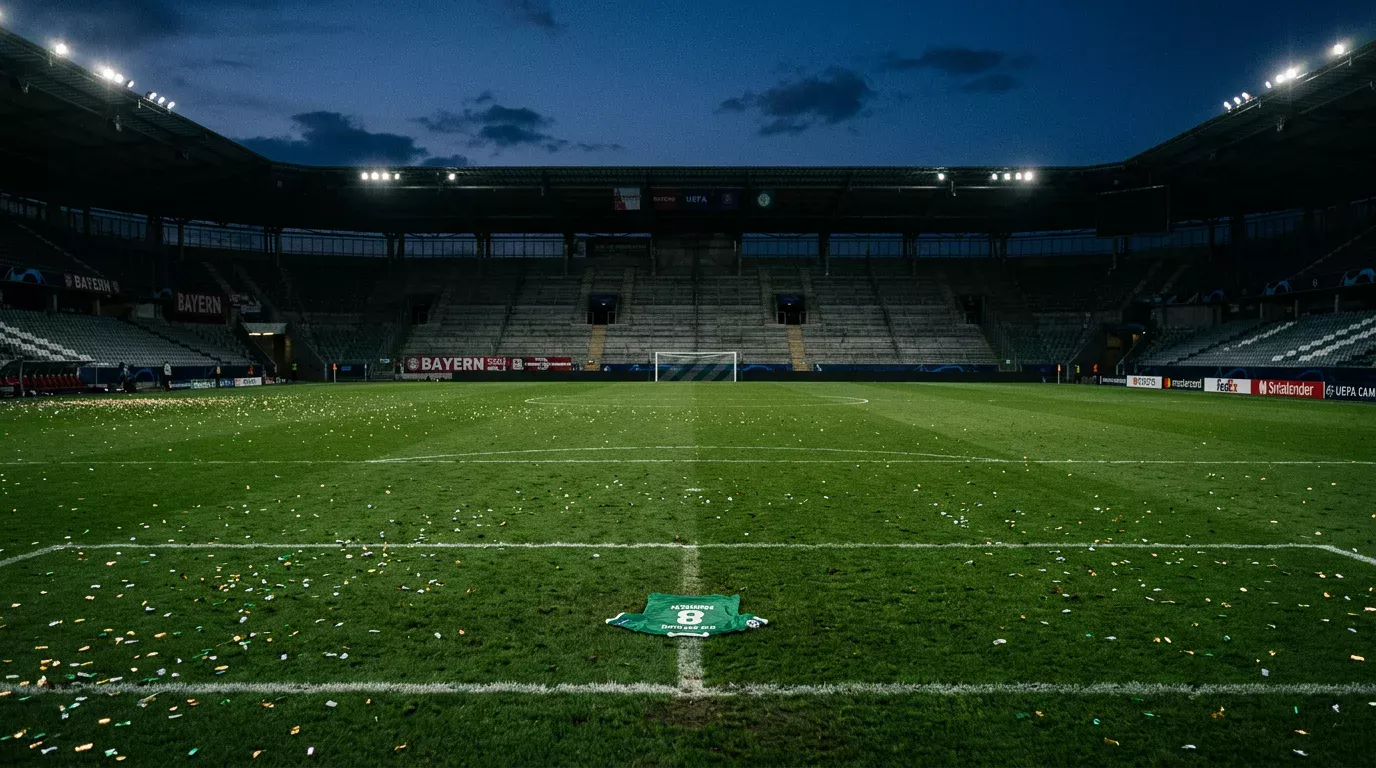
I was in a pub in Dublin watching those penalties. The fourth one hit the post and spun away, and the silence that followed was the loudest sound I have ever heard in a room full of people. Phones went face-down on tables. Pints were lifted and put down without being drunk. Someone near the back said, “Not again,” and nobody needed to ask what he meant. Czech Republic 2, Ireland 2 — and 4-3 on penalties. Another World Cup without us. The sixth in a row. The longest drought since we first qualified in 1990, when Jack Charlton turned a nation of GAA fans into football believers overnight. That Prague night in March 2026 will sting for years, and I am not going to pretend otherwise. But this is a betting site, not a grief counselling service, so let me walk through what happened, what it meant, and what it means for Irish punters watching the World Cup 2026 from the outside.
The Qualification Journey — From Underdogs to Nearly There
Nobody expected Ireland to be in the conversation. When the UEFA qualifying draw placed us in a group with Portugal, Hungary, and Armenia, the general consensus — among analysts, pundits, and most Irish fans if they were being honest — was that third place and a playoff spot would constitute a successful campaign. Portugal were the clear group favourites. Hungary, with their aggressive pressing and Puskás Arena fortress, were expected to claim second. Ireland’s job was to beat Armenia home and away, take what they could from Hungary, and hope the playoffs were kind.
What followed exceeded every expectation. Ireland finished second in the group, behind Portugal and ahead of Hungary, on 18 points from ten matches. Five wins, three draws, and two defeats — both against Portugal — produced a campaign that was the best Irish qualifying performance since the 2002 World Cup cycle. The wins were not scrappy or fortunate. Ireland beat Hungary twice — 1-0 in Dublin and a stunning 3-1 in Budapest — thrashed Armenia 4-0 at the Aviva, and produced the result of the campaign against Portugal: a 2-1 victory in Dublin that remains one of my favourite nights covering Irish football.
The defensive record was transformative. Ireland conceded just eight goals in ten qualifiers, a level of defensive discipline that previous squads — even the best of the Martin O’Neill or Mick McCarthy eras — never achieved. The midfield worked tirelessly to protect the back four, the centre-backs headed and blocked everything that came near them, and the goalkeeper made saves in crucial moments that kept Ireland in matches they might have lost in previous cycles. This was not the smash-and-grab Ireland of old. This was a team with structure, belief, and a clear tactical identity that produced results against sides ranked twenty to thirty places above them.
Troy Parrott was the talisman. His hat-trick against Hungary in Budapest — two clinical finishes and a penalty despatched with the confidence of a player who had spent his entire life preparing for exactly that moment — was the defining individual performance of Ireland’s qualifying campaign. Parrott scored six goals in ten qualifiers, including both goals in the Dublin victory over Portugal, and his development from a promising teenager at Tottenham into a genuine international striker was the story that gave the campaign its emotional arc. When he stepped up to take Ireland’s third penalty in Prague, the entire nation believed he would score. He did. It was the fourth penalty, taken by another player, that decided everything.
That Night in Prague — Penalties and Heartbreak
The UEFA playoff semi-final against Czech Republic in Prague was the most emotionally intense 120 minutes of football I have covered as an analyst. Ireland went behind early — a Czech goal from a corner that exposed a marking lapse at the near post — and spent the next seventy minutes chasing the game with an urgency that bordered on desperation. The equaliser came from a Parrott header, nodded in from a Josh Cullen cross that was delivered with the precision of a player who knew this might be his only chance to create a World Cup moment. 1-1 at full time. Extra time produced a second Czech goal — a breakaway counter-attack that caught Ireland pushing forward — and another Irish equaliser, a scrambled finish from a corner that VAR confirmed had crossed the line by millimetres. 2-2 after 120 minutes. Penalties.
Ireland’s first three penalties were taken with composure. Parrott, Cullen, and the third taker all found the net. Czech Republic matched them, three for three. Ireland’s fourth penalty — I will not name the player because he does not deserve to carry that burden publicly — hit the outside of the post and bounced away. The Czech Republic’s fourth penalty went in. 4-3. Over. Done. Another World Cup without Ireland.
The reaction in Ireland was unlike anything I have seen after a football defeat. This was not the anger of a bad performance. This was the grief of a near-miss — the knowledge that Ireland had been ninety minutes, then thirty minutes, then four penalty kicks away from a World Cup place, and that the margin between qualification and elimination was the width of a post. The players on the pitch in Prague were in tears. The fans in the away section stayed for thirty minutes after the final whistle, applauding a team that had given everything and fallen short by the smallest possible margin. Back in Dublin, pubs that had been raucous throughout extra time fell quiet in a way that felt more like a bereavement than a sporting disappointment.
The Heroes — Troy Parrott’s Hat-Trick, Beating Portugal
Before the heartbreak, there was glory, and Irish football deserves to remember the glory alongside the pain. Troy Parrott’s hat-trick in Budapest — scored away from home against a Hungarian side that had been unbeaten at the Puskás Arena for over two years — was a performance that belongs in the same conversation as the great Irish international displays of the past. His first goal, a curling finish from the edge of the box that left the Hungarian goalkeeper rooted to the spot, was the kind of strike that announces a player on the international stage. His second, a poacher’s finish from three yards after the goalkeeper parried a long-range shot, showed the predatory instinct that separates top strikers from merely good ones. His penalty, driven low and hard to the left, completed a hat-trick that made front pages across Europe.
The Portugal victory in Dublin was a different kind of achievement. Ireland did not outplay Portugal — that would be an exaggeration. But they outfought them, outworked them, and took their chances with a clinical efficiency that stunned a Portuguese side accustomed to dominating possession and territory against lesser opposition. Parrott’s opener came from a counter-attack that began with an Irish centre-back heading clear a Portuguese corner and ended, twelve seconds and six passes later, with the ball in the net. The second goal was a free kick, curled over the wall and into the top corner with the technique of a player who had practised that exact strike a thousand times in training. Portugal pulled one back, pressed for an equaliser, and were denied by a combination of desperate defending and a goalkeeping performance that I rank among the finest in recent Irish history.
These moments matter beyond the immediate results. They proved that Ireland can compete with elite European opposition, that the squad contains players of genuine international quality, and that the next qualifying campaign — for the 2028 European Championship — begins with a foundation of belief that the previous two cycles lacked entirely. For Irish football, the 2026 World Cup qualifying campaign was the most significant step forward in a decade, even though it ended one penalty kick short of its ultimate destination.
Six World Cups Without Us — Putting It in Perspective
Ireland have not appeared at a World Cup since 2002. Six consecutive tournaments missed. An entire generation of Irish football fans — people now in their late twenties — have never seen Ireland play at a World Cup. The last time Ireland were at the tournament, Robbie Keane was scoring against Saudi Arabia in Yokohama, Damien Duff was terrorising full-backs with his pace and directness, and the nation stopped to watch every match in a way that felt culturally significant rather than merely sporting. That 2002 squad reached the Round of 16, lost to Spain on penalties — penalties again — and came home to a heroes’ welcome that Dublin Airport had never seen before or since.
Twenty-four years is a long time in any context, but in international football it is an eternity. Germany have won a World Cup and been eliminated in the group stage twice in the same period. Spain have won the tournament and fallen from dominance. Argentina have gone from despair to glory and back to contention. Ireland have watched all of it from the sofa, occasionally threatening to qualify, more often falling short at the earliest hurdle. The 2010 playoff against France — the Thierry Henry handball — was a different kind of injustice: a qualification stolen by cheating. The 2014 and 2018 campaigns were forgettable. The 2022 cycle produced nothing of note. But 2026 was different. 2026 was genuine.
The perspective that matters for this site is practical rather than emotional. Ireland’s absence from the World Cup 2026 means that Irish punters approach the tournament as neutrals — no emotional attachment to a specific team, no obligation to back Ireland at whatever odds are offered, no heartbreak when our group-stage hopes are extinguished in the final matchday. There is freedom in neutrality, and the smartest Irish punters will use that freedom to make decisions based on analysis rather than loyalty. The rest of this site is built for exactly that purpose.
So What Now? — The Irish Neutral’s Guide to the World Cup
The World Cup is happening. Ireland are not in it. Both of these facts are true, and neither cancels the other out. The tournament runs from 11 June to 19 July, and for thirty-nine days, the world’s attention will be on football — the most-watched sporting event in human history, played across sixteen stadiums in three countries, with 48 teams and 104 matches. Irish pubs will show every match. Irish bookmakers will offer markets on every fixture. And Irish fans will watch, bet, argue, and experience the World Cup with the same intensity they always have, whether or not the Boys in Green are involved.
The betting advantage of being a neutral is real and measurable. Emotional bettors — fans who back their own country regardless of the odds, who bet against rivals out of spite, who let group-stage heartbreak influence their knockout-round decisions — consistently underperform relative to neutrals who approach each match as an independent event. Irish punters at the 2026 World Cup have no emotional noise. Every bet can be made on merit. Every match can be assessed on form, fitness, and tactical matchup rather than national loyalty. In a tournament with 104 matches, that clarity of judgment across the full schedule is worth more than any single inspired pick.
My suggestion: adopt a team for the group stage, back them with a modest stake, and enjoy the ride. Scotland are the obvious choice for cultural reasons, and their Group C fixtures against Brazil and Morocco will provide the emotional investment that makes a World Cup worth watching. England are there for those who enjoy a more complicated relationship with their adopted team. Or pick a debutant — Cape Verde, Curaçao, Jordan, Uzbekistan — and enjoy the pure joy of watching a nation experience the World Cup for the first time. The betting angles are covered elsewhere on this site. The emotional angle is yours to choose. And the next time Ireland qualify for a World Cup, the joy will be even sweeter for having waited this long.
