
MetLife Stadium — World Cup 2026 Final Venue
 Available in US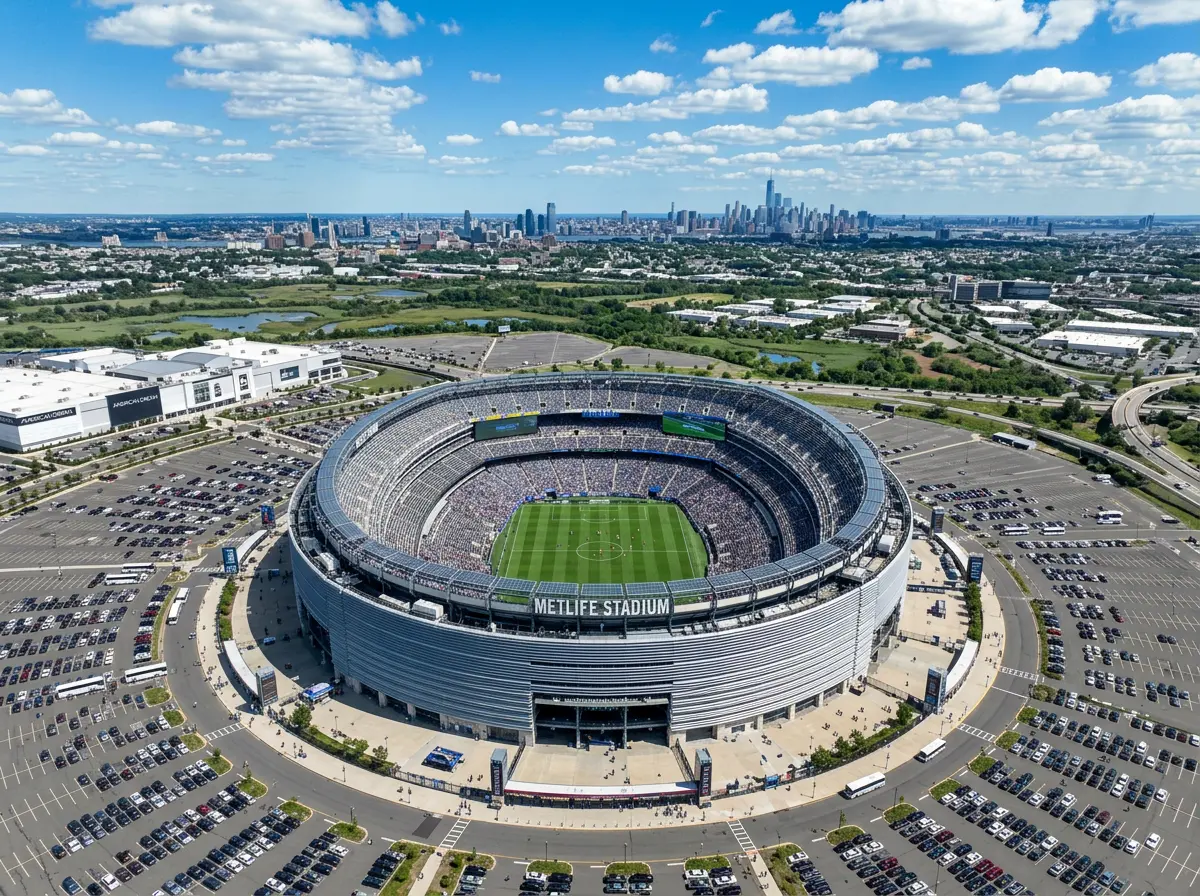
On 19 July 2026, two teams will walk onto the pitch at MetLife Stadium in East Rutherford, New Jersey, and one of them will lift the FIFA World Cup trophy. That single sentence carries more weight than any statistic or odds table I could offer. The World Cup Final is the most-watched sporting event on earth, and the stadium chosen to host it tells you everything about the scale of ambition behind the 2026 tournament. MetLife Stadium is not just a venue — it is the destination that every squad in the competition is working towards. For nine years I have been analysing tournament betting markets, and understanding the final venue matters more than most punters realise. The pitch dimensions, the climate, the altitude, the crowd capacity — all of these factors influence how the match will be played and, by extension, where the value lies in long-range betting markets.
About MetLife Stadium
MetLife Stadium opened in 2010 as the home of both the New York Giants and the New York Jets of the NFL, replacing the old Giants Stadium that had stood on the same site in the Meadowlands Sports Complex since 1976. The stadium cost approximately $1.6 billion to build, making it one of the most expensive sporting venues ever constructed at the time. Its capacity for football matches is expected to exceed 82,000 for the World Cup configuration, with FIFA likely expanding that figure through temporary seating arrangements to accommodate the demand for the final.
The stadium sits in East Rutherford, New Jersey — technically not in New York City, though it is commonly referred to as part of the New York metropolitan area. The Meadowlands location is accessible by car, bus, and the NJ Transit rail system, with dedicated match-day transport routes expected to be established for the World Cup. The venue has hosted numerous high-profile events beyond NFL football, including the 2014 Super Bowl — the first outdoor cold-weather Super Bowl in the modern era — international friendlies, concerts, and motorsport events.
For the World Cup, MetLife Stadium will undergo modifications to meet FIFA’s pitch requirements. The natural grass playing surface, which will be installed specifically for the tournament replacing the usual artificial turf, will measure 105 metres by 68 metres — FIFA’s standard dimensions. The stadium’s open-roof design means matches will be played in the elements, and the New Jersey climate in mid-July typically brings hot, humid conditions with temperatures regularly exceeding 30 degrees Celsius. That heat factor will influence how teams approach the final — squad depth and fitness become critical advantages when the temperature rises in the second half.
The atmosphere at MetLife is shaped by its bowl design, which concentrates crowd noise and creates a wall of sound that can be overwhelming for visiting teams. With over 82,000 supporters packed into a stadium that was built for American football’s intensity, the World Cup Final will generate a noise level that few players will have experienced before. For teams accustomed to the more reserved atmospheres of some European stadiums, the MetLife environment could be a genuine factor.
World Cup 2026 Matches at MetLife Stadium
MetLife Stadium will host multiple matches throughout the tournament, culminating in the World Cup Final on 19 July 2026. FIFA has allocated the venue for group-stage fixtures, knockout-round matches, and the showpiece event itself, making it the most important stadium at the entire tournament. The exact match schedule — including which group-stage matches and which knockout fixtures will be played at MetLife — is subject to FIFA’s final confirmation, but the venue is expected to host at least six to eight matches across the tournament.
The semi-finals and the final will be played in the United States, and MetLife’s selection for the final reflects its capacity, infrastructure, and location within the New York metropolitan area — the largest media market in North America. The global broadcast logistics of hosting the final in the Eastern Time zone also played a role: a late afternoon or evening kick-off in New Jersey translates to prime-time viewing in Europe and manageable morning start times in Asia and Oceania. For Irish viewers, a typical evening kick-off at MetLife would translate to roughly 11pm or midnight IST — late but watchable.
From a betting perspective, the venue for the final matters because it influences which teams are most likely to be comfortable on the day. European and South American teams with experience of playing in hot, humid conditions will have a natural advantage over teams accustomed to cooler climates. The open-roof design means there is no escape from the New Jersey summer heat, and the team with superior fitness and rotation depth throughout the tournament will arrive at MetLife in better physical condition. That factor subtly favours squads like France, Spain, and Brazil — teams with the depth to rotate players across group matches without compromising quality.
East Rutherford and the New York Metropolitan Area
East Rutherford is a borough in Bergen County, New Jersey, located roughly 13 kilometres west of Manhattan. The Meadowlands Sports Complex — which includes MetLife Stadium, the Meadowlands Racetrack, and the American Dream mega-mall — is the area’s primary commercial landmark. For World Cup visitors, the practical reality is that East Rutherford is a stadium destination rather than a tourist base: fans will travel in from New York City, where the hotels, restaurants, and nightlife provide the social infrastructure for a World Cup experience.
New York City itself needs no introduction. For Irish fans making the trip — and the direct Dublin-to-JFK flight makes it one of the more accessible World Cup destinations — the city offers a World Cup backdrop unlike any other. The Irish community in New York is enormous, with established neighbourhoods in the Bronx, Queens, and parts of Manhattan providing a home-from-home atmosphere. Finding a pub showing the football will not be a problem. Finding one that serves a decent pint of stout alongside it is even easier.
Transport between Manhattan and MetLife Stadium takes approximately 30-45 minutes by NJ Transit bus or train, depending on the route and match-day traffic. FIFA and local authorities will establish dedicated transport corridors on match days, and the Meadowlands complex has extensive parking for those driving. The infrastructure has been stress-tested by decades of NFL games, concerts, and major events, so the logistics of moving 80,000-plus fans in and out should be manageable — though “manageable” and “comfortable” are different things entirely.
Stadium History and Significance
The Meadowlands has been hosting major sporting events since the original Giants Stadium opened in 1976. That venue saw World Cup matches during the 1994 tournament — including the famous group-stage match between Italy and the Republic of Ireland, where Ray Houghton’s goal secured a 1-0 Irish victory that remains one of the most celebrated results in Irish football history. The site carries personal significance for Irish fans: this is where we beat Italy at a World Cup, and the new MetLife Stadium stands on the same ground where that triumph occurred.
The 2026 World Cup Final at MetLife represents a full-circle moment for American football hosting. The 1994 tournament — the most commercially successful World Cup at the time — proved that the United States could stage a major football event, and the final at the Rose Bowl in Pasadena drew over 94,000 spectators. Thirty-two years later, the final returns to the New York area with an expanded 48-team format and global interest that dwarfs anything the 1994 organisers could have imagined.
Getting There From Ireland
The good news for Irish fans: MetLife Stadium is arguably the most accessible World Cup venue from Ireland. Direct flights from Dublin to John F. Kennedy International Airport (JFK) and Newark Liberty International Airport (EWR) operate daily, with flight times of approximately seven hours. Newark is the closer airport to MetLife Stadium — roughly 20 minutes by car without traffic — making it the preferred arrival point for fans heading straight to the Meadowlands.
Accommodation in the New York area will be in high demand during the World Cup, and prices will reflect that reality. Early booking is essential, particularly for the later rounds and the final itself. Fans looking for more affordable options should consider staying in New Jersey rather than Manhattan — towns like Hoboken, Jersey City, and Secaucus offer lower hotel rates and easy access to MetLife via public transport. The PATH train system connects these areas to Manhattan for sightseeing, while NJ Transit provides direct access to the stadium.
For the complete World Cup 2026 match schedule in Irish time, including all MetLife Stadium fixtures, check our dedicated schedule page.
