
World Cup 2026 Group F — Netherlands, Japan, Sweden, Tunisia
 Available in US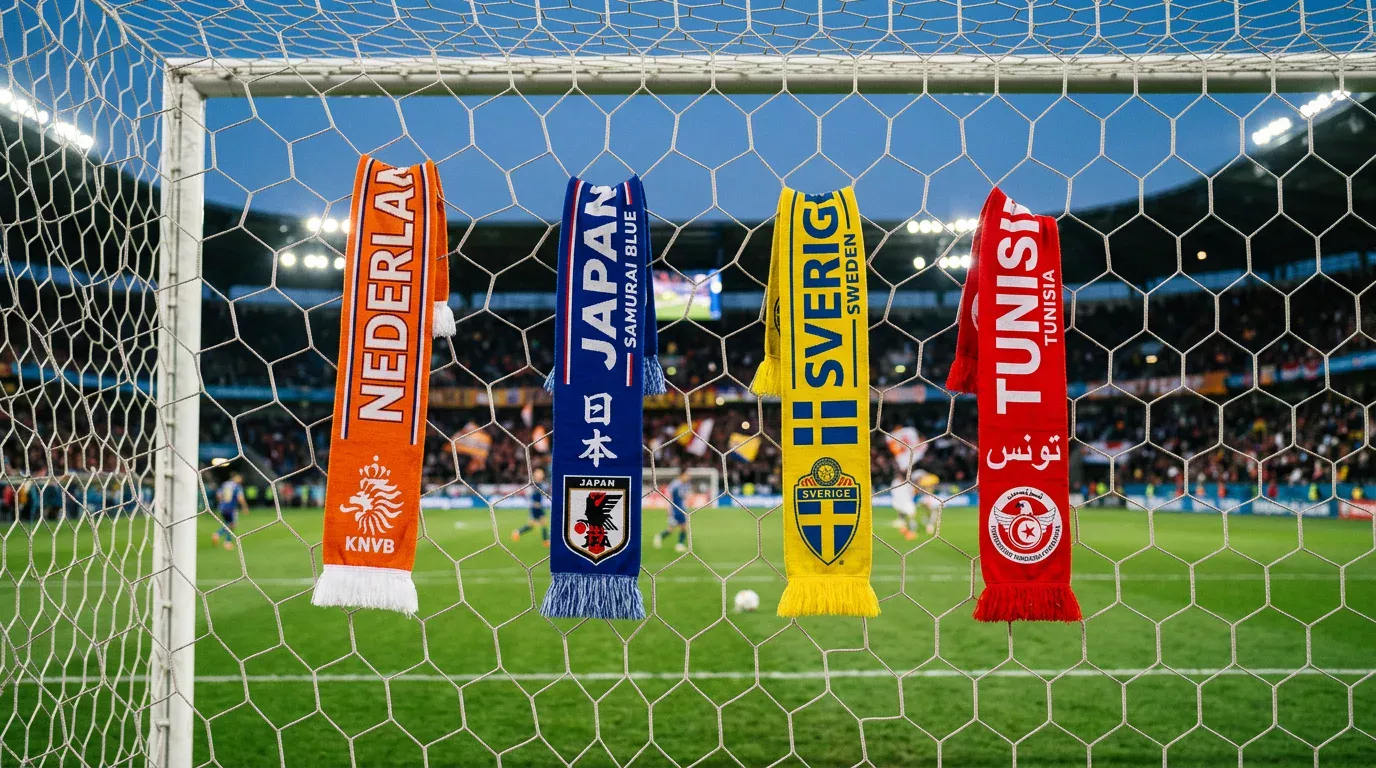
If you asked me to name the most competitive group at this World Cup, Group F would be in the conversation. Four teams, all with legitimate claims to finishing in the top two, and not a single side you could confidently call a pushover. The Netherlands bring European pedigree and a squad stacked with Premier League talent. Japan arrive as the team that stunned Germany and Spain in 2022 and have only improved since. Sweden clawed their way through the UEFA playoffs with a dramatic 3-2 win over Poland. And Tunisia, ever the stubborn African qualifier, have a knack for making life miserable for more fancied opponents. World Cup 2026 Group F is the draw every punter should be studying closely, because the margins here are knife-edge thin and every fixture has the potential to reshape the standings entirely.
Netherlands — Oranje’s European Pedigree
The Netherlands have reached three World Cup finals and produced some of the most beautiful football the tournament has ever seen. The Total Football of 1974, the devastating counter-attacks of 2010, the tactical flexibility of 2014 — Dutch football reinvents itself every generation while keeping its core identity intact. The current Oranje squad sits somewhere between pragmatic and creative, with a defensive structure that is more disciplined than the stereotypical Dutch approach and an attacking line that can hurt anyone on the break.
At the 2022 World Cup in Qatar, the Netherlands reached the quarter-finals before losing to Argentina on penalties. That experience — performing well but falling short at the decisive moment — has shaped the squad’s mentality heading into 2026. The players know what it takes to navigate a group stage and survive the knockouts. What they lack is the final edge that separates semi-finalists from champions, and whether the current coaching setup can provide that edge remains an open question.
In Group F, the Netherlands are favourites at around 4/5 to top the group, and that pricing reflects their squad depth and tournament experience. Their Eredivisie pipeline continues to produce technically gifted players who slot into European club football seamlessly, and the spine of the team — from goalkeeper through central defence to the attacking midfield — is settled and reliable. The Dutch tradition of developing young talent through structured academy systems means there is always a next generation ready to step in when established players age out, giving the Oranje a sustainability that few national teams can match.
The concern is their group opponents: Japan have already beaten bigger European sides at a World Cup, Sweden are battle-hardened from the playoffs, and Tunisia will not gift them anything. The Netherlands should qualify, but topping the group is far from guaranteed. Their opening match against Japan — a rematch of their 2022 Round of 16 encounter — is the fixture that will define their Group F campaign.
Japan — The Team That Keeps Surprising Everyone
Japan’s 2022 World Cup campaign was a masterclass in preparation and belief. They beat Germany 2-1 in their opening match, lost to Costa Rica, then beat Spain 2-1 to top their group — results that announced Japanese football as a genuine force at the highest level. The tactical sophistication of that squad, combined with the technical quality of players competing in Europe’s top leagues, made Japan one of the most impressive teams at the tournament before they exited in the Round of 16 against Croatia on penalties.
Since 2022, Japan have continued to develop. Their player pool in Europe has expanded — the number of Japanese players in the Bundesliga, Premier League, La Liga, and Serie A has grown significantly — and the national team’s tactical identity has become more assertive. Where previous Japanese squads were content to sit deep and counter, the current generation presses aggressively, dominates possession phases, and plays with a confidence that borders on audacity. Against European opposition, Japan are no longer the plucky underdogs. They are genuine contenders.
Japan to finish in the top two in World Cup 2026 Group F is priced at around 6/5, and I think that represents decent value. Their quality is clear, their recent tournament record is outstanding, and their players are match-fit from competing at the highest club level in Europe. The Asian qualifying campaign was dominant — Japan topped their group with a record that left no doubt about their credentials — and the squad depth has reached a point where the second-choice eleven could comfortably compete in most World Cup groups.
The risk is consistency — Japan’s 2022 campaign included that puzzling loss to Costa Rica between two brilliant victories, and a similar lapse in Group F could be fatal against four strong opponents. If Japan bring their A-game to all three matches, they can top this group. That is not hyperbole. That is a reflection of where Japanese football stands in 2026.
Sweden — The Playoff Fighters
Sweden’s road to the World Cup 2026 went through one of the most dramatic UEFA playoff matches in recent memory. Trailing Poland 2-1 with time running out, Sweden scored twice in the final fifteen minutes to win 3-2 and book their ticket to North America. That result captured everything about Swedish football: resilience, physical courage, and an ability to dig deep when the situation looks impossible.
The Swedish squad is built around a traditional Scandinavian framework — tall, strong, aerially dominant, and tactically rigid. Their defensive line plays high and relies on a collective pressing structure to win the ball in the opponent’s half, and when they lose possession, the recovery shape is immediate and aggressive. Set pieces remain a core weapon: Sweden’s delivery from corners and free kicks is among the best in European football, and their record of scoring from dead-ball situations in qualifying was exceptional.
In Group F, Sweden face a steep challenge. The Netherlands and Japan both possess the technical quality to bypass Sweden’s pressing game, and Tunisia’s defensive discipline could frustrate Swedish attacking play in the fixture that Sweden most need to win. At around 5/2 to qualify, Sweden carry value as a third-place bet — finishing behind the Netherlands and Japan but above Tunisia, with enough points to potentially advance as a best third-placed team. Their playoff pedigree proves they handle pressure situations well, and that mental toughness could be the difference in tight group-stage matches. Sweden have historically punched above their weight at World Cups — reaching the quarter-finals in 2018 and the semi-finals as recently as the 1994 tournament — and writing them off entirely would be unwise.
Tunisia — Organised, Stubborn, and Underestimated
Tunisia have qualified for six World Cups, and in almost every tournament, they have exceeded expectations relative to their ranking. At the 2022 World Cup, they held Denmark to a goalless draw and beat France 1-0 in the group stage — a result that proved they belong at this level even if group-stage elimination followed. The Eagles of Carthage play a style that prioritises defensive organisation above all else: compact shape, disciplined positioning, and a willingness to absorb pressure for long periods before striking on the counter.
The Tunisian squad draws players from the French, Saudi, and North African leagues, creating a blend of technical quality and physical robustness. Their central midfield is their strongest area — two tireless workers who screen the defence and distribute with intelligence — while their wide players provide pace on the transition. The defensive unit is well-drilled and communicates effectively, which is why Tunisia concede so few goals against stronger opponents. They do not beat you with brilliance. They beat you with patience and discipline.
At around 4/1 to qualify from World Cup 2026 Group F, Tunisia are the longest-priced team in the group but far from a foregone conclusion for last place. Their ability to stifle more talented opponents makes them a nightmare draw for any team expecting an easy three points. If they can take a point from the Netherlands or Sweden, the group standings become chaotic — and chaos is where Tunisia thrive. Their 1-0 win over France in 2022 was not a fluke; it was the product of a game plan executed to perfection by a squad that understood exactly what was required and delivered it without deviation.
Tunisia are the kind of team that punters should factor into their accumulator considerations — not as a selection to back, but as a side capable of derailing predictions built around more fancied opponents. If your accumulator includes the Netherlands to win all three group matches, Tunisia are the team that could collapse the entire bet with a stubborn 0-0 draw.
Group F Match Schedule in Irish Time
Group F matches will be played between 14 and 23 June 2026. Irish Standard Time sits five hours ahead of Eastern Time and eight hours ahead of Pacific Time, so the specific venue for each match will significantly affect when Irish fans need to tune in. Matches at east coast US stadiums will kick off in the late evening IST, while west coast venues could push start times past midnight.
| Date | Match | Venue | Kick-off (IST) |
|---|---|---|---|
| 14 June 2026 | Netherlands vs Japan | TBC | TBC |
| 14 June 2026 | Sweden vs Tunisia | TBC | TBC |
| 19 June 2026 | Netherlands vs Sweden | TBC | TBC |
| 19 June 2026 | Japan vs Tunisia | TBC | TBC |
| 23 June 2026 | Netherlands vs Tunisia | TBC | TBC |
| 23 June 2026 | Japan vs Sweden | TBC | TBC |
The opening-day fixture between the Netherlands and Japan is a mouth-watering start to Group F and could set the tone for the entire group. The parallel fixture — Sweden vs Tunisia — is equally important for the battle for third place. FIFA will confirm final scheduling details ahead of the tournament.
Group F Odds and Our Prediction
This is the group where certainties go to die. The Netherlands at 4/5 to top the group feels right, but Japan at 6/5 to finish in the top two might be the smarter bet. The Samurai Blue have proven at the last two World Cups that they can beat elite European opposition, and their squad has only gotten stronger. If I had to pick one group where the pre-tournament favourite finishes second rather than first, Group F would be my choice.
My predicted final standings: Netherlands first, Japan second, Sweden third, Tunisia fourth. The margin between first and second will come down to the Netherlands vs Japan fixture on Matchday 1 — the winner of that match controls their own destiny, and the loser needs results elsewhere. Sweden will compete hard for third place and could accumulate enough points for a best-third-place berth, particularly if they beat Tunisia and take a point from one of the top two sides. Tunisia will frustrate opponents but ultimately lack the attacking quality to finish above three stronger sides.
For Irish neutrals, Group F is pure football entertainment. No emotional investment, no historical baggage — just four good teams trying to outwit each other across nine days. Make time for the Netherlands vs Japan opener. It could be the best group-stage match of the entire tournament, and for punters who enjoy in-play markets, the tactical chess between two evenly matched sides will create opportunities throughout the ninety minutes.
For the full breakdown of all twelve groups, see the World Cup 2026 groups overview.
